
Driving Full Funnel Brand Equity Through Tubi with PepsiCo's Caitlin Winsor and Tubi's Chris Grillo


 Apple Podcasts Apple Podcasts
  Spotify Spotify
  YouTube YouTube
  Overcast Overcast
  Amazon Music Amazon Music
  Audible Audible
  iHeartRadio iHeartRadio
  Castro Castro
  TuneIn TuneIn
  RSS Feed RSS Feed
  Audacy Audacy
  Castbox Castbox
  Fountain Fountain
  Goodpods Goodpods
  PlayerFM PlayerFM
  PocketCasts PocketCasts
  Podcast Addict Podcast Addict
  Podchaser Podchaser
  Podurama Podurama
  Podverse Podverse
  Podyssey Podyssey
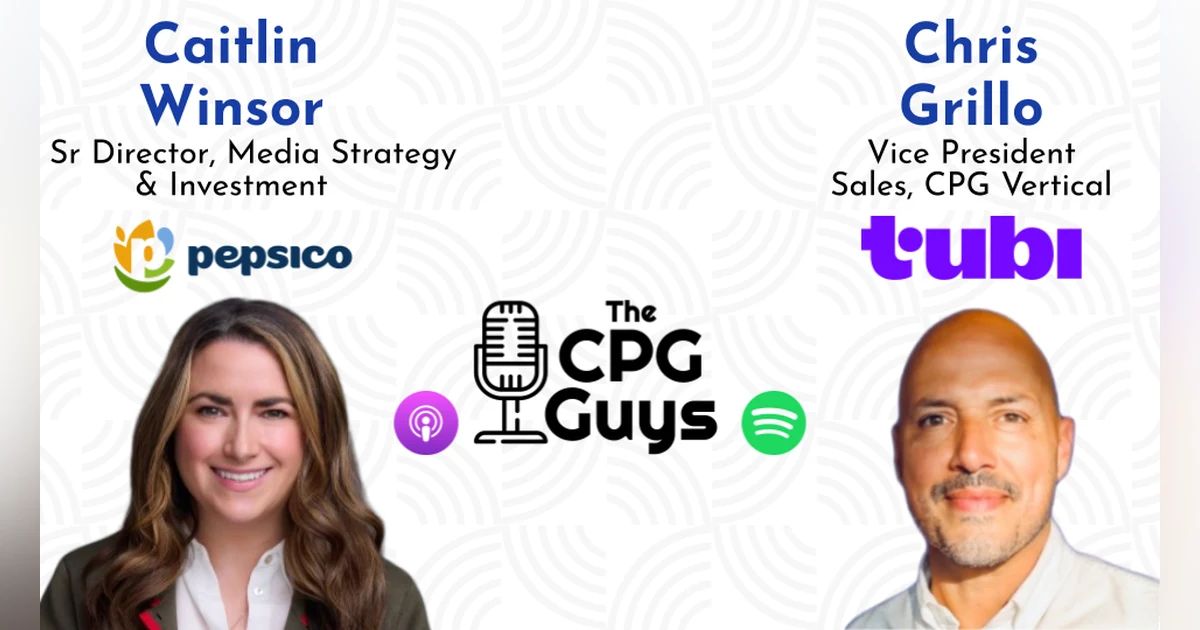
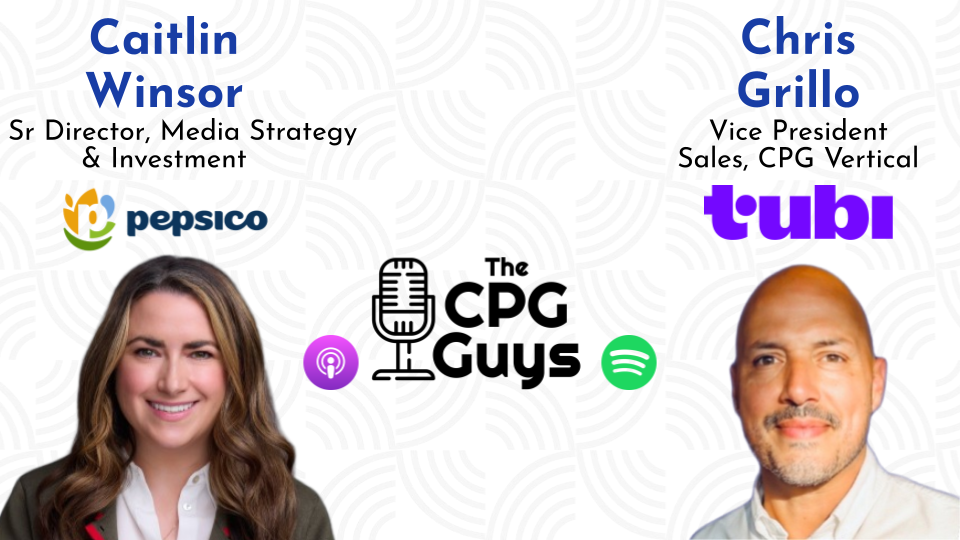
 The CPG Guys are joined in this episode by Caitlin Winsor Senior Director of Media, Strategy & Investment at PepsiCo and Chris Grillo Vice President of Sales, CPG at Tubi, the most watched free TV and movie streaming service in the U.S.
This episode is sponsored by Tubi.
Follow Cailtin on LinkedIn at: https://www.linkedin.com/in/caitlin-coburn-winsor-80789810/
Follow PepsiCo on LinkedIn at: https://www.linkedin.com/company/pepsico/
Follow Chris on LinkedIn at: https://www.linkedin.com/in/christopher-grillo-abab465/
Follow Tubi on LinkedIn at: https://www.linkedin.com/company/tubi-tv/
Follow Tubi online at: https://corporate.tubitv.com/partners/advertisewithus/ad-experience/
We ask them these questions:
- How would you describe Tubi’s role in the CTV ecosystem today?
- What shifts are you seeing in how they think about reach, engagement, and performance in streaming?
- Where does connected TV fit within your overall media mix strategy, and what signals do you monitor when evaluating a new CTV partner?
- What were some of the most surprising or important findings for CPG marketers in the Harris Poll study?
- How are these insights challenging or reshaping traditional assumptions around reach, frequency, and engagement for CPG brands?
- How do these findings align with what you’re seeing in your own consumers and media performance?
- What are the key implications for how CPG brands should rethink their media mix and investment strategies moving forward?
- As CPG brands invest more in streaming, how are they starting to think differently about what success looks like beyond just reach and awareness?
- Can you share a recent example where a CPG campaign on Tubi delivered a measurable lift that surprised the team?
- In the CPG space, how do you collaborate with advertisers to craft creatives that perform on CTV?
- Are there best practices for integrating traditional TV ad assets with shorter video assets for streaming environments to maximize resonance and efficiency?
- With inflationary pressures and changing consumer behavior, how do you optimize the media mix to protect brand equity while driving growth on CTV?
- What attribution model or measurement framework do you rely on for CTV campaigns?
- What does a successful CPG–CTV partnership look like from your perspective?
CPG Guys Website: http://CPGguys.com
FMCG Guys Website: http://FMCGguys.com
SheCOMMERCE Website: https://shecommercepodcast.com/
DISCLAIMER: The content in this podcast episode is provided for general informational purposes only. By listening to our episode, you understand that no information contained in this episode should be construed as advice from CPGGUYS, LLC or the individual author, hosts, or guests, nor is it intended to be a substitute for research on any subject matter. Reference to any specific product or entity does not constitute an endorsement or recommendation by CPGGUYS, LLC. The views expressed by guests are their own and their appearance on the program does not imply an endorsement of them or any entity they represent.
CPGGUYS LLC expressly disclaims any and all liability or responsibility for any direct, indirect, incidental, special, consequential or other damages arising out of any individual’s use of, reference to, or inability to use this podcast or the information we presented in this podcast.
Caitlin
I'm Caitlin Windsor, the Senior Director of Media Strategy, Planning and Investment at PepsiCo.
Chris
Chris Grillo, Vice President of Sales at Tubi, and I lead the CPG Vertical. And you're listening to the CPG Guys Podcast.
PVSB
Hello and welcome to the CPG Guys Podcast, set at the intersection of commerce and tech. Your hosts, Sri Raja gopalan and Peter V. S. Bond, explore how brands and retailers engage consumers in a digitally driven world. And now, here are the CPG guys.
Sri
Hello, and welcome to this episode of the CPG Guys Podcast. And we are live in Manhattan, New York City at the Tubi TV offices. Start spreading the news. Say it again twice. Wow, you're singing in New York store?
PVSB
I am that's what happened. Yeah, don't keep it up. We got three subway stops in Brooklyn, they're after my family. I'm the real deal.
Sri
I'm not that fair, fair. Very fair. And of course, what are we doing? Our usual favorite programming, making podcasts, of course, with our industry's key leaders on very important topics. And I'm just happy to do it live from a fast upcoming, I want to say TV channel, but a guest today. They're free to correct me.
Speaker 1
Yeah.
Sri
So that's what we'll do. I'm, of course, Sri, your co-host and co-founder, CRO of ThinkBlue Consulting, your trusted partner in your Omnichannel Development Journey. Get in touch with me there at Sri at thinkblueconsulting.co. Listen to my older daughter's music at www.rhearaj.com and do follow Laura Raj. My younger daughter is a member of the world's fastest growing global girls group, Katse ye. And we're just back from watching Katseye debut at Coachella Live, which was, needless to say, mind blowing. Watching a DJ set from 2 a.m. to 6 a.m. Story for another day. Weekend filled with music, my two faves that I got to meet and hang out with, Becky G, and then my favorite, of course, lots of stories to tell, Trent Reznor from the 9-inch nails, who I had to wait 50 years of life to meet in person. I'm joined today, of course, by my co-host and co-founder, PVSB, who also moonlights as head of industry and client engagement at Flywheel, Commerce Acceleration Division of Omnicom. Peter, you got something new starting with your daughter tomorrow for the first time.
PVSB
What is it? I know. I am at her request, I'm taking her for her very first golf lessons. My God, she came to me and said, Dad, I want to learn to play golf. I'm like, I did cry a little. But uh yeah, no, we're really excited about that. But Tri, I'm also excited. You and I went to Jackie Robinson the day last night at Yankee Stadium.
Sri
We both had our 42s on. Peter calls me Pretend because 42 is Mariano Rivera, but Mari Mariano is a legend, as we know. So we won't compete. Hall of Famer.
PVSB
Let's just celebrate that. And the Yankees won. And the Yankees won.
Sri
A miracle win in the ninth inning thanks to an infield flyout missed catch on first base. Maybe we should do this episode now. So make sure you're less listening and subscribing to our podcast on your preferred platform. We can get our latest episodes, go back and consume some of the 580 plus episodes we've already published. Now let's welcome our guests. We've got a dynamic duo indeed from one of our favorite brands and Tubi TV. So welcome to the CPG guys. First joining us is Chris Grillo, Vice President of Sales at Tubi.tv, bringing a proven track record of building high-performance sales engines and a deep understanding of streaming monetization, content partnerships, and audience growth. Chris' hands-on leadership has helped Tubi scale its retail operator and DDC, aka direct to consumer initiatives, aligning product strategy with go-to-market execution in a way that drives sustainable, measurable results. One of our favorite brands in the world, alongside Chris, is Caitlin Winsor, Senior Director of Media Strategy at none other than PepsiCo. Of course, Peter and I, both alums of PepsiCo. Caitlin is a trusted architect of media ecosystems, studying multi-market media planning and investment with a sharp eye for ROI, brand safety, cross-channel efficiency, work powers, ambitious campaigns that balance brand storytelling, data-driven optimization, ensuring PepsiCo optimizes, every media dollar across paid, owned, and earned channels. Together, this pair will bring a rare blend of direct sales leadership and strategic media stewardship. On this episode, we'll unpack how 2BTVs, unique distribution and partnerships intersect with brand media strategy, share lessons on aligning, sales incentives with marketing outcomes. Explore agile media planning can indeed accelerate growth in a rapidly evolving entertainment and consumer landscape. Let's jump into it. Welcome Chris, welcome Caitlin to the CPG guys.
Chris
Thanks for having us. Thank you.
Sri
Looking forward to it. So I'm going to jump right in. But before that, of course, in the digital line and notes of this episode, we'll include links to your LinkedIn profile, your company's corporate websites for our listeners to access while we go on with our conversation. So let's jump into the question, shall we? Chris, first up, teen you up, man. For listeners new to TB, describe Tubi's role in the CTV ecosystem today and how has that evolved last 18 odd months?
Chris
Sure. I think we can't talk about the last 12 to 18 months of Tubi's growth without first talking about the last five years or so. So back in 2021, say, we had about 40 million monthly active users. Now we can proudly say we have well over 100 million. And the reason for that growth is because we're positioning ourselves as the world's largest free ad-supported on-demand video service. We have a great offering, uh, tons of content, over 300,000 titles, movies, TV shows, uh home of classic cartoons, you name it. We also have a fast channel portion of our platform as well, which is only 5%. We're 95% AVOD. We always want to make sure we tout that out in the marketplace. So we are an AVOD-first platform, and we have a pretty simple business model. There are no subscription fees on Tubi. Right? We are a totally free service, we're fully ad supported, and we have a great audience profile, right? It's very large, multicultural, primarily cord cutters and cord nevers. And who those people are folks who've never had traditional TV in their homes, right? That's the large makeup of our audience. And in the last 12 to 18 months, I'd say some of the key milestones for us have been that we had streamed the Super Bowl this past year, which was huge for us. I think a lot of people were surprised that we had it. We did great and we did executed it flawlessly. We also had the Thanksgiving Day game this past year. Um we've expanded original content on our platform with a lot of young adult original titles, sports documentaries, you name it. So we're creating originals here on Tubi. Um, more of an increased focus on creator content and the creator economy. We know that's a huge initiative for us and for brands out there. And lastly, we're preparing now for the World Cup 2026. We're owned by Fox. We have a great partnership with them. Uh we will be able to now provide content around the World Cup this summer in a new and exciting way for consumers. So we're excited about that. So just a ton of growth over the last 12 to 18 months, and really just like we're free forever, fully ad-supported, 100 million monthly actives. So we're out there, we're doing great things, and we're excited for the future.
Sri
So for the millions who don't want to pay for a Netflix subscription, is there a future where Popstar Academy with CatSai will be on Tubi?
Chris
Is that something they can make an intent? Absolutely possible. I think we should just, you know, we just gotta get the right connection, you know. I think that we need someone who can help bridge the universal music, man.
PVSB
Let's do it, let's do it. Uh welcome to the podcast. Uh Chris, I'll tell you, I'm gonna have it too. So of course you obviously in your role have an opportunity to speak with a whole lot of CPT advertisers. Start thinking about where they're taking their awareness advertising in the face of you know declines in traditional linear television platforms on IBM, they're like, we still we still have a need to create awareness. And they start looking at Tubi as a credible uh alternative. So I I'd like to understand what shifts you are seeing in how they're thinking about reach engagement in and performance around streaming and connected television. And how do you see Tubi being a facilitator of that transition?
Chris
Yeah, it's a great question. I think we've seen like a big shift from brands and advertisers saying, how many people did I reach to what did it actually drive, right? So getting results of those.
PVSB
That's the big industrial, right? It's the actual outcomes, yes, outcomes as opposed to I've got a big audience, but I can't tell you what happens after.
Chris
And Kaitlin can attest to this, but she'll say, like, we want incremental reach, right? We're spending this money in the marketplace. How do we get more for our money? We want to make sure they have higher attention and also measurable real world impact, right? So is it purchases, is it store visits, et cetera, et cetera. So we feel like that's the place where we can really help. And then our value prop is that we do have high attention viewers, right? We have the lowest ad load in the biz, we like to say, less than four minutes an hour, which I think is something we can say that comfortably we are the best in the business in that. And we have improved user experience, right? User experience on these platforms, I mean, there's so many of them out there, is really very, very important. And I think for us, we know that a user experience that's good equals a better experience for a brand. So I think in that regard, we're doing things there that others aren't. And at the end of the day, we had a quote from a recent Gen Z person, I would say, and they said, if you're going to advertise to me, make it worth my time. Right. That's a really important thing that we think about here at Tubi. So I think in general, we're trying to make it available to everyone. We want to have a good experience when they're there. Uh, and I think that's really about not only just spending dollars on a platform, but getting something from it.
PVSB
Speaking on behalf of all Gen X, I feel like that's a good one. Yeah, yeah, totally.
Sri
I'll I'll speak on behalf of the Gen Alpha for a second. You mentioned something right up front, which is um you built the platform for a generation that has never really had a big TV or cared about one. How important is that though? Because uh as there's more cable shifting happen, cable cut and cord, whatever Peter called that. There's truly a generation that was born digitally that only knows programming through connected TV. So Square fit, right? And Kaitlin, that's the backdrop of my question. PepsiCo obviously is a broad media investment strategy. You know, y'all are not lacking from a reach and a household penetration perspective across the brands. Where does CTV fit within your overall media mix strategy and what signals do you actually monitor most closely when evaluating a new CTV partner?
Caitlin
Yeah, it's a great question. CTV is definitely an important part of our mix, but probably not for the reasons you might think. It's not about just a replacement for TV behavior. I think we look at it as more of a how are consumers spending their time. And this is an avenue where they're actually spending time and how are attentive and receptive to messaging. So if you think about just like how Gen Alpha and many other generations are experiencing like an abundance of content coming at you from all angles at all times, you're scrolling nonstop, you've got advertisers beating you over the head in different ways all the time. So it's like we are looking for these environments where you have attention and you have people that are receptive to advertising. So I think that's where you know we know that streaming can deliver all of those things. And then when it comes to Tubi in particular, I think what's become really interesting to us is that audience opportunity. So if you think you've got your younger, more diverse audience, like being able to capture them where they're actually paying attention, that's huge for us. So I think that's how we've been thinking about it on that front, because it's been especially challenging to capture that audience. Obviously, incremental reach kind of table stakes for us as well, but I think we've kind of gone one click beyond that.
PVSB
So, Chris, uh, my background is market research, right? And so I ran where you reasonably partnered with the Harris to better understand how consumer behavior is shifting in this streaming area. This is very fascinating to me. I'd love for you to share with our audience what were some of the most surprising and important findings that CBG marketers should really pay attention to.
Chris
Well, I have some stats for you. Because we were very, very excited. Big stats guy. Big stats guy. So we were really excited to partner with the Harris poll, and we were waiting patiently for the results. And when we got them, we found some really interesting things. One of them, I'll go by kind of category here, but by viewer mindset. 89% of those polled feel most relaxed while streaming, which we just talked about, right? Streaming is an attentive kind of you're leaning in, you're relaxed. 80% of those said prefer they prefer streaming over phone scrolling. I'm a doom scroller. My wife hates it. I'm on the phone all the time. It's like, what are you doing? But when we are watching our favorite show or TV program, I'm off my phone. I'm I'm leaned in, I'm watching. And then 64 it matters.
Sri
I'm a Doom scroller as well. One weekend, Coachella alone, I picked up 25k followers one weekend. Just with digital contact page. Congrats. Well, got about 24,098 to go.
Chris
It's true. I think, you know, that's I mean, 64% of those said streaming helps them unwind. You're putting your kids down. That's not easy for me. I have an almost five-year-old. Not easy, right? You have a long day at work, you're commute, you come home, you want to watch your favorite show, right? You want to stream and you're you're unwinding and relaxing. And this was surprising that streaming is the number two most trusted advertising channel only after a company's own website, which I thought was interesting. Social is number seven. And I'm a former social media sales guy, and I was surprised by that. I thought that would be much higher.
PVSB
Great advertisers, if you want to build trust with your audience, maybe social media isn't the place to start. There are there are better places to think about building.
Chris
I'm just going off the the poll results.
Sri
You're saying an old dude like me who's worked hard last year to build like 350k followers is worthless? Or would go to the number seven control?
Chris
No, I don't think that. I think that's important. I think everybody, you know, every time you can gain an audience somewhere, it's important. I just think the mindset of where you are. I know, but I'm trying to get it. There's a role for all of it. There is, there is. So when it came to brand receptivity, which is a word I never knew existed until now, 49% were open to discovering new brands while streaming, right? 74% like brands that support free content via ads, which I thought was cool.
Sri
74%. Yeah.
PVSB
Safe fit.
Chris
They're free and formed. Exactly. They're like, hey, I get it. Like, thank you, Pepsi, right? We we get we get it. Uh and then when it comes to commerce impact, 62% get product inspiration from streaming ads, which I can kind of see where that would work, right? They see an ad they like, they're in a comfortable mindset. Hey, that could be a brand that I might want to want to work with. Or purchase. Four and five were more likely to purchase from streaming advertisers than not. Another interesting one. And then the key takeaway for us after all these results from the poll was that streaming equals discovery plus action, not just exposure. So it's not just about seeing an ad, it's about action.
PVSB
That's it. It's the outcome. Absolutely, it's the outcome that gets brains excited about C T B.
Sri
Beauty about it. It is you can go back and replay it and watch the ad again. But you gave away a little bit of a secret sauce of the CPG guys. So we were the first podcast we started up during COVID. And I believe to the day we're successful because we're streaming. And that's our primary mechanism, how we disseminate information. I think you said 64% of the polled audience said they enjoy it's a relaxing environment for them. It's an important number. So, Chris, these uh stats that you just given us, how are they challenging or reshaping traditional assumptions around reach, frequency, engagement for CPG brands?
Chris
There's definitely some changing assumptions out there. I think if you're a dinosaur like me, the old model was frequency and GRPs drives results, right? You just put as much advertising out there as possible and you're gonna get a result.
Sri
Not because on a sharks well well listen.
Chris
But extinct probably You're a more refined dinosaur than I am. We'll put it out. Uh and I think the new model is context and mindset. Mindset. Okay. And the new model is context and mindset matter more than volume, right? So you have to be strategic in what you're doing and how you're placing your media dollars versus just mass viewership. Uh so the key shifts we think are less clutter, right? More meaningful engagement, and then move from interruption into integration into experience. So it's again, it's about placing your media dollars and your impressions in places that can actually have impact.
PVSB
Right, great. All right. So, Caitlin, in your role at PapSico, how do these findings align with what you're seeing in your own proprietary and syndicated research around media performance?
Caitlin
I mean, I subscribe to a lot of what Chris is saying. I think it aligns pretty closely to what we're seeing and where we're where we think things are going. In the past, I think what Chris was alluding to is like we optimize largely for scale. It was like, how do we get the most people? I'll add reach to the frequency occasion, but like, how do we get as many people as possible? And then how do we get them as efficiently as possible? And that was the playbook for many years across the industry and a lot of advertisers probably still is the case. I think we're we're trying to go a little bit further than that. I don't, I think we realize that there's a million different ways to engineer cheap reach. I think that's just not the challenge that we all have today. The mindset part of this, I think, is really the unlock and one that we're, you know, we think is a lot more important than it used to be when there were fewer ways to connect with people. And so streaming is one of those environments where everything Chris said, if their people are relaxed, what is the opportunity for the brands to connect with you in that way? We know social has a role to play. We know there's influence to be had there. We know there's a ton of reach in a lot of places. But if we are capturing someone when they are going to be most receptive to receiving a number of different messages, like that is, you know, gonna be lightning in a bottle for us.
Sri
So um what I what a big takeaway already that's shaped in my head on streaming TV, listening to both of you, is it's no longer an upper funnel reach mechanism, it's an actual full funnel mechanism. So that's the backdrop of what I want to move us next to, which is I would love for you both to preach to the industry, both Chris and you, Caitlin, what are some key implications for how CPG brands should rethink their media mix, therefore, because now CTV is seen as a full funnel mechanism. And what would you guide them on investment strategies moving forward?
Chris
Yeah, I could take the beginning of this one. Go ahead. Um, I think what we're trying to get at here, this conversation is like using streaming as a discovery engine and a conversion driver, not just like again, a mass reach play. Some of the focus areas we think brands need to be working around is have textual alignment, right? So whether it's around genres or moods or types of content, and then high attention creative, I think always will work. So have it tailored for streaming. I think a lot of times we think, well, if you have creative and you have it running on linear TV or video, it it translates to streaming. I think you can tailor it to streaming, which is important. And then a balance of broad reach, because you do have to have the reach. You have to have the broad scale, but also surround that with key like cultural moments or tempo moments that your brands are interested in. And then again, with that creative approach, just have it to be more platform-specific, a little more, you know, not again, not repurposed, but just more, you know, aligned with the streaming platform that you're using.
PVSB
Yeah, I think that this is absolutely fascinating. I want to hear your take on it. Brand perspective.
Caitlin
Yeah, so I think like from a media investment perspective, we're already here. Like we've bought into this, we know where we're seeking attention. I think we've probably unlocked is probably like we've underutilized the canvas that these opportunities afford us. So if you start to think like we've always looked at video as like the tippity top of the funnel, right? Right. But now that's no longer the case. If you have these, you know, semi-captive consumers, why would we not take that opportunity to go deeper with them, right? Like to use that opportunity to talk about, you know, a new product benefit, to talk about, you know, um, reinforce any new functions, new news we might have, to tell a more complex story. Um, I just think we're we might be leaving some of this on the table by by not kind of pulling through, you know, weightier expectations for this type of a consumer experience.
PVSB
It presents you with an opportunity to connect to the outcome.
Caitlin
That's exactly right.
PVSB
Why not take that opportunity while it's presented to you and serve up and not just to your point sit at the discovery end of the funnel and say, no, no, I can I can move them much quicker down to the end and actually measure whether that works.
Caitlin
That's right. And it's it's going from like, yes, hey, we exist, remember us, to like creating some conviction with consumers and getting them to take action.
Sri
You know, Caitlin, interestingly, your North America CEO, Rom, made a post today about talking about brand um functionality in the you you just referred to that one again. Interestingly, your North America CEO, Ram Krishnan, made a post on LinkedIn today and he says the most important chapter Is often the physical or digital shelf moment. Which one should I buy? And you referred very specifically. To storytelling about brands, functionality, a new message, perhaps, is exactly what you said. Kinda resonates with the posties made today. Do you see a future where CTV, brand communication of a new message, a new functional benefit, etc., you see yourself ramping up on CTV?
Caitlin
I do. I think it's about use cases and about the like objective setting. And one thing we talk a lot about is role clarity within our media mix, right? Like we can't expect everything in a world where there was three TV networks and you know, large catalog of magazines, it was a very different sort of consumer experience. But if we're thinking about like there are certainly channels and platforms that are going to be more about how do we capture scale. Some are going to be driving specific audience interaction or around a specific growth cohort or even a context that's really important to us. I think CTV is definitely where we see it, is very much in the how do we use this channel and these platforms to drive more consideration and resonance for the consumer.
PVSB
Caitlin, so in talking to your contemporaries who might be listening to this podcast, how would you counsel them on thinking differently about success metrics beyond just reach and awareness with now everything we've kind of talked about in the last couple of uh questions around there's so much more to CTD? What would be what would be your guide?
Caitlin
Yeah, I think it you just have to take a more specific look. And I think that's one thing we've done a uh we've over the past probably 18 months on our side, we've done a number of different teardowns. We've gotten really quite rigorous um with our objective setting and what our expectations are for the different platforms and placements to deliver on. So, like if you're setting, you know, if you think about a, you know, a brand or a campaign architecture, how are we, how are we mapping all of these um critical pieces of the equation and of the mix to specific audiences, to specific outcomes? Um, so I again, it's just it's become such an interesting time to be in the media industry because we have like it's like a wealth of different opportunities, and there's no one way to do it. So I think being able to really understand what all of the platforms and placements can provide to you and provide from an audience and objective standpoint, I'd really just it's it's a bit of a broad answer, but I at the same time, it's it's about refocusing and understanding all that these different placements can deliver.
Sri
Let me remind our audience that we are speaking today with Caitlin Windsor from PepsiCo and Chris Krillow from the hundred million now strong audience of Tubi TV. Caitlin, back at you. How do you balance brand safety, brand lift, and performance when optimizing campaigns on a free ad-supported platform like Tubi?
Caitlin
I think sometimes we over-complicate this one. Brand safety for us is kind of an expectation. You don't have it. Call us back when you figured it out. You basically that that is table stakes at this point. And obviously, Tube is a brand safe environment. So that's not really even a part of that equation. But in general, we look at that as just foundational versus having these all be sort of competing elements. So foundationally, you've got your brand safety, and then from there, we talk about effectiveness. That's like the next step. So you have, are we reaching the right person at the right time with the right message? And then hopefully from there, you start to see the true brand impact and the business outcomes follow. So I think again, less about balancing all three of those things and more about building off of each other.
PVSB
Yes, would love essence, you love to quote staff.
Sri
I got more. Our audience loves, by the way.
PVSB
They do ask us for show, show, show me the show and don't. Exactly. It's the show me state. We're from Missouri. Um, can you share a recent example of where a CPG campaign on TV delivered measurable lift around ROAS, incrementality, awareness, and that really caught the attention of it?
Chris
I can't. Yes. Without naming without naming the brand, we did do a recent campaign in the first quarter with a popular snack brand. And we partnered with InMarket, which is one of our measurement partners, and we saw some results that we thought were intriguing. 9.2% increase in incremental sales lift and a 2.5% higher ROAS versus InMarket CPG benchmark. So for that one in particular, the client was very happy. We were very happy with it. And the key insights we took from that were that streaming drives real-world action. Store visits, right? We say purchases, and that is, I know, a big thing for Caitlin and her brands is just they want to make sure they're moving product off-shelf. We hear that all the time. And it reinforces that four to five users, another stat, more likely are to purchase after exposure, right? So we know that they do have an impact once the viewer sees the ad, and hopefully that means action. So that's just one example. We have a lot of other campaigns we're running that we always try to attach measurements to because we want to have those stats to prove out afterwards that it worked. And so we're excited to get those back in shape.
PVSB
I want to double-click down on one thing you mentioned in market. In order for you to be able to deliver these measurements of outcomes, having a strong partnership in the ad tech ecosystem is a critical element to what could be is bringing.
Chris
And we work with across the board with several measurement partners. We like to make sure that the clients and the brands we work with are aligned, and hopefully with those campaigns, the success is there. Again, transparency, being able to share those internally and externally, obviously, is really important. So yeah, it's critical to anything we do.
Sri
Thank you. Chris, back at you. In the CPG space, so price, that's what we're talking about today, CG. How do you collaborate with advertisers to craft creatives that perform on CTV? I mean, we'd love to know is is the creative format for CTV have a different set of expectations given the 100 million audience than other uh other types of programming in the media mix? And are there formats or storytelling approaches you find fairly effective?
PVSB
That I think from my perspective, I have to think about you have to be very aware of like what are the devices that people are most often using in streaming TV versus more social media people are very much that's gotta play a role in how you think about making recommendations as to the format of the app.
Chris
100%. And and talking to you know brands all the time. And again, I've worked in social, I've worked in digital and linear, and now in streaming, I think that is very important, right? To have the right creative needs to feel native to the viewing experience, right? So again, we now have things like animated pause ads, which we think are really cool when you're watching a show and you pause it.
PVSB
It's not just a static still image, it's a it's an animated thing, but it you're not you're not being forced to miss important. Yes. Yes.
Chris
I think it's yeah, and a great place for a brand to insert a message, right? I always say if you're a dog food company and you're going to get a snack and your dog's sitting there, like mine's always sitting there staring up at me, like, where are you going? I'm like, well, I'm gonna bring a snack back to him too, right? So it's a really cool way to kind of integrate and to work an ad product into you know a brand messaging. Content alignment, right? So we want to make sure it matches the viewer's mood. If you're watching, you know, terror on Tubi, which is usually you know horror or thrillers, maybe you have a piece of creative that is exciting and you know, I don't know, can match the mood of the viewer at the time. And we talk about contextual relevance. Um, 67% of people prefer aligned ads and other staff for you, right? So they want ads that align to what they're watching or the mood they're in. So I think that's really important. And there's definitely like a strategic shift with creative best practices, right? So they're moving away from again repurposed TV spots and they're kind of having more custom streaming spots. And then again, developing kind of a streaming first storytelling message with that. So I think that's where you look at streaming and how it's different than other mediums out there, it has to be unique to streaming. I think that's what we would say. And I'm not the creative guy, but our creative team would would definitely be instilling in our our partners to when they were thinking about creative on TV.
Sri
You know, the example you gave of the dog really is resonating with me. I have a dog, and you are 100% right. Every time we pause, walk up, go get a snack, what's the first thing she does? She's looking for a snack herself.
Chris
Looks so sad. I feel terrible.
Sri
Time to run that ad.
Chris
I feed my dog PepsiCo products up, so usually Doritos or you know, like yeah.
PVSB
All right.
Sri
My personal favorite's always been Laith. Yeah, 100%. Peter calls me a dog sometimes. Especially when the Yankees win. Doesn't happen that often. 27 championships. Just remind them, Chris, you're in New York.
Chris
I'm on I'm on decide this.
Caitlin
I'm a Red Sox fan, so I just stay quiet over here.
Chris
They they had they had a run for a bit. We'll have another podcast about the rivalry. We can do that.
PVSB
I think we'll have to. Yeah, we're gonna we'll work on that 100%. Bring it on. It's okay, Lynn. Obviously, PEPSCO's invested a tremendous amount in creating content for traditional television. Are there best practices for thinking about repurposing those assets for streaming environments to maximize res and efficiency, or is it about listen, I need to I need to start from scratch. I need to build a whole new set of content that's more appropriate for streaming. What's kind of like the sweet spot from your perspective?
Caitlin
I think Chris was kind of hitting on it a little bit. I think we're trying to move away from this sort of adaptation game where you like start out with this perfect 30 that everybody is in love with and lust and and then figure out how do you quarter turn that or cut that down and make it work in different environments. And we've started to talk about a bit more about more campaign systems. So in that way, you'd have land on your core idea and then sort of build the assets around it. And so they all sort of have a role to play. So your 30 still might be, you know, where your full message lives. That's maybe where you land your emotional tone, but then you start to have cut downs that can solve for a specific job to be done. Maybe that is talking about a specific product benefit or more relevant to an environment or has the branding up front for a less attentive environment. So I think we, you know, in its best case, it's like a perfect orchestration of a campaign system. Um, and then you're not forcing a bunch of assets that are not primed for different platforms in bad consumer experiences, basically. So we've really tried to move to more of that type of thinking and planning. Obviously, it requires a lot of pre-planning, really tight briefs, cross-team collaboration, but that's really the sweet spot.
PVSB
Involving to be to help refine it, to make sure that everybody's aligned as a critical opponent to delivering those outcomes that they want to be seen.
Caitlin
That's right. And they they do like do a great job of just keeping us up to speed on like what is happening, what are what are consumers calling for, what is a good experience for them, so that we know we can kind of keep these back pocket as we're as we're building the right messages.
Chris
We don't want to force it either, right? So you don't want an asset that's not gonna work. So our creative team will be like, hey, this is what we suggest, and it's up to you guys to either go with our advisement or not. But usually they're like, you guys know best. And I think, again, not having that asset that just doesn't seem like it fits.
Sri
And the viewers know it. Or Caitlin, I'm coming back to you now. Coming back. So, Caitlin, the last few years post-COVID have seen significant volume challenges driven by inflationary pressures. Needless to say. Volume growth and growth is a big aha these days. Quarter over quarter over quarter. Let me just grab another water if you don't mind. Any one of those work. Actually, we should know it better.
Chris
I think life water might be the appropriate.
Sri
I was actually part of the launch team back in.
Caitlin
You know, it's funny. When I first started at PepsiCo, people were saying, you know, right now we're the Pepsi Super Bowl halftime show, but who's to say we won't be the Aquafina halftime show?
Sri
I remember we launched and then Dasani magically launched the week after. So um, anyway, let's bring it back. All right, Caitlin. Obviously, since COVID, inflationary pressures have driven significant challenges for volume growth. That's the mantra of today, quarter over quarter over quarter, which has obviously resulted in changed consumer behavior. So, how do you optimize that media mix where you can protect brand equity? I mean, it is PepsiCo, bunch of legendary brands, while having that focus for growth quarter over quarter, with CTV in particular.
Caitlin
Such an important question. I think the biggest shift for us is recognizing consumers are making more deliberate choices, not only on how they're spending their time, but their money. And then, you know, from a media perspective, you're starting to see how that's playing out this like case-shaped economic dynamic in the media space too. So you have people who are stacking all of these premium subscriptions. They're building their own like cable-esque sort of library of subscriptions, ad avoiders in some respects. And that's fine. But then you also have the alt to that where people are trying to get value, right? So that's value in our products, but also value exchange for content. So they're willing to see an ad, receive an ad in exchange for content. So I think that's something that we've been playing, paying really close attention to. And I don't think it's like an either-or in our investment shifts or how we think about how we're going to grow. I think it becomes more of a conversation of do we have the right audience strategy end-to-end so that we're capturing people in the right places for how consumers are actually living today, really.
PVSB
I want to go a little double-click down on the whole measurement aspect. I think we've kind of talked about it philosophically and strategically, but I want to ask you around the attribution model or measurement framework that you're relying on for CTB campaigns. I've got to imagine leveraging clean room capabilities are very much. I know we've we've had a previous episode with PepsiCo where we talked in depth your very early stage in terms of using this. How are you using multi-touch attribution, experimental design or companion measurements with digital and partnered with social? How are you really trying to get the most out of understanding the efficacy of CT?
Caitlin
Yeah, PepsiCo, we are evaluating all of our media channels the same way. I think over the last year or so, we've kind of focused the agenda to be like, let's look at how this delivers on reach, resonance, and ROI. So all three of those. So specifically for ROI, we have an in-house marketing mix model, and that's going to illuminate for us any short-term sales. But at the same time, we're leveraging first and third-party brand lift studies. So, you know, most recently we've been working a lot with Cantar to understand effectiveness in brand building, on the brand building side of things. Um, and the balance here is just super critical for us because I think, you know, in certain cases, people, you know, focus squarely on ROI. On certain times, they're focusing squarely in the other direction. And I think what we we've sort of subscribed to is that the balance is critical because yes, we need to deliver on the business in the short term. We absolutely need to. But at the same time, um, the long-term success is going to be largely predicated on whether or not, you know, we have been building strong equity for the brand so that we can uh, you know, drive demand and pricing power in the category.
PVSB
I've got to imagine it will change also based upon where you are in the life cycle of the brand. Like when you're launching a new brand, the ROI is not a critical consideration. You're about creating awareness and driving trial. Yes. If you sit there and try and micromanage the profitability and the ROI on that, you're you're not gonna have a successful.
Caitlin
You can't too we can't have too blunt of a framework for this. And I think that's why like creating some room for balance in this also allows us to be pretty adaptive to the the future of how we're building our portfolio of brands.
Sri
Perfect segue for my next question. You kind of answered it right there. You can't be too blunt about this partnership with CTV. But I love both your perspectives, Chris, yours first, and then you, Caitlin. What therefore what what's the building blocks or the makeup of a successful CPG, CTV partnership look like from each of your eyes? Chris, maybe you can go first.
unknown
Sure.
Chris
Well, I will say, starting out to answer that question, I've known Caitlin for over 10 years, work with Pepsi since, I don't know, mid-2015-ish or so. So I know uh a lot about what they're looking for in a partnership that's successful, and we've had you know years of that, thankfully. Um, but transparency, I think, is key. Like there's a question about something, you have an answer they may not love. You have to be honest about it and talk about it and figure out how you can pivot to make things work. And when things aren't working, you get them to get them to work. When they're when they're working, you want to keep them working, right? So I think for us it's strong collaboration across the board, whether it be with the media team, the brand teams, the agency, that's the approach we always want to take. Test and learn mindset. So we always like to get to them and say, hey, we have something new, we want you to try it out. Sometimes they're they're they're game, sometimes they're not. But again, we want to make sure that we can bring them the opportunities that we believe work for them. And then obviously the ability to optimize based on performance. So we want to say, again, pivot to things that are working well, pivot away from things that aren't working well. And we have to be the source for that knowledge for them. And then obviously highlighting successes and making sure we're transparent about things that don't succeed. But I think the main thing is nobody loves a public-facing case study more than I do. But when we have successes and we want to showcase those, it's important for us to make sure they know what's working, right? For whether it be for one brand or multiple brands. So I think that's a big part of it, just making sure we can build these stories to share with them to make sure that they're utilizing their dolls in the right way. Um, and just again, ongoing collaboration, just making sure that we're always in front of them, giving them the latest and the greatest, and making sure that we have, you know, any questions that they have, we answer timely and have uh solutions for them as we move forward.
Caitlin
I think, Chris, I mean, obviously you nailed it. I think transparency, candor, key. Like let's just have honest conversations about what we need to accomplish. And one thing we've always said is any of our big partners, we just expect them to have an understanding of our business and be able to advocate for us within the walls of their own company. So you understand what we're trying to solve for, help us figure that out and bring us more than just inventory, right? Like bring us opportunities, take our feedback and building things for feedback and how to better connect with consumers. So just really kind of just leaning on the strengths of you know what we bring to the relationship, I think just helps move everything out of being transactional and more how are we going to drive both sides of this business?
Chris
I think you said knowing their business is a huge part of it, right? Knowing what their initiatives are, what they need when they work with us and and how campaigns need to be, you know, the kind of results they need. So that's always like super important for us is to make sure we're aware of what they their challenges are.
PVSB
Really?
Sri
Well, you know, Paparaji is a digital creator. I told you, 3K, at this point. But we can't not talk about the importance of digital creators on the platform. Are you all partners with digital creators? How are you leveraging partnering with digital creators on the platform?
Chris
Yeah, that's a huge initiative for Tubi. So we know that, like I said, I think I mentioned earlier, creators and the creator economy is a huge part of what we're doing here at Tubi. I think we have done a really good job of bridging the gap between creators and brands that work together. And we have the creatorverse on Tubi, which is a portion of our platform that is dedicated to creators. We're working hand in hand with creators. We have a team here that's now working with a brand and they say, hey, do you have a creator you're working with or have a partnership with? Yes, we do. How can we connect them to our team to create original content from those creators? So it's really a place where we're looking to invest heavily, not only from you know a monetary standpoint with investment just throughout the company as far as content goes, but also investing with our partners to make sure we can, you know, bring them what they need because we know that that's such a really relevant and important part of the ecosystem right now. So I think for us, it's probably one of the top two or three things that we're investing in moving forward. And I think a lot more is to come in the next, definitely leading it to 26-27. So stay tuned for that. I think you'll see a lot more things that are coming out.
Sri
Great to hear you have a whole section of the platform dedicated to creators. Let me toss it over to Peter to close it out with the last question for y'all.
PVSB
I'm going to close out this conversation with you by being forward-looking. Um, would like to understand the start with you, Caitlin, emerging trends and capabilities around connected to end streaming that will reshape how CPGs plan and buy media over the next couple of years.
Caitlin
One thing I'm just very curious to see how it happens is how are, you know, how are the how is 2B going to, you know, maintain these audiences? You capture them. So what's what's the plan for that? Like I think there's, yes, there are capabilities that you can bring, but like how do, you know, what is the next slate of compelling content look like? What are how are you making the the ad placements and the ad experience still a good experience for consumers? So again, I think, you know, with the type of churn that people see in the industry, I think I have a lot of eyes out to see, you know, how a lot of the platforms manage for that. And then same goes for commerce. Obviously, anything that's going to help shorten the path from initial interest to action, I'm I'm all ears for, but that's gonna feel a bit natural. It's gotta make sense, not feel super forced. So I think there's still, you know, room to build that capability, you know, industry wide. And then, of course, you know, for 2B in particular.
Chris
Yeah, I think I can touch on a couple of those, but for me, increased addressability, right? Being able to reach those audiences and having a more precise audience targeting, right? Like being able to target the consumers you want to hit at scale.
PVSB
Your resolution's got to be a big 100%.
Chris
100%. And then as far as commerce integration goes, you know, RMNs, we talk about them all the time. They're here to stay. It's it's you know, you can't avoid having to have those conversations with your brands and partners about how you're utilizing those live shopping experiences, right? Like that's another thing that we see all the time. It's you know, innovation there and how that's gonna change in the next, you know, two to three to five years. I can't imagine how much more you know precise they can be as far as timing and when those ads are being served. And then ad innovation. I think we've created 10 plus ad formats in the last year, year and a half. I think I would say we're in the forefront of that when it comes to the CTV space. So more of those coming along. And then we can't talk about the next two to three years without AI and how that's gonna be a huge part of what we do and how it's it's involved in all the enhanced we have and new ways to engage with ads and consumers. But I think just again, continued innovation and expansion, and that can come in a host of ways. But I think for us at Tubi, we are very much in tune with our viewers and users and what they want and how they want to be treated when they're in inside the 2B ecosystem. So I think we're excited to kind of create and innovate and lead the charge there. So lots to come, but again, without having a crystal ball, I think we'll be in a good position moving forward.
Sri
Speaking of AI, a lot of excitement on what AI holds for the industry in general and the CPG guys. There's not one episode that passes by where someone isn't asking us a question or we aren't. Hopefully, we'll do an episode fully dedicated to AI because that's going to change advertising forever. Not just the measurement portion, which is already a give, which is a given, but the creative portion. Lots of conversation today on positives, negatives of going AI-based creative. So hopefully we can do another episode just dedicated to that, especially on a CTV platform. Let me remind our listeners you can find all of our content by simply going to a web browser and typing cpgguys.com as the URL. That easy. If you or someone you know is something to contribute on this ongoing discussion on the CPG guys, please drop us a line at contact at cpgguys.com to our audience. Thank you for the clicks, likes, comments, DMs, meeting us at trade shows, coming to our events, recording episodes with us, and to all of our sponsors. We're always grateful for you. Show doesn't exist without all of you. You work with us all year and we're grateful to have you as our audience and partners. Thank you, thank you, thank you. Peter, fun as always, especially these live ones are a lot more fun. Give us your big takeaway for today.
PVSB
It's just that Streamy TV presents so much more meaning to brand advertisers than what traditional New Year television had in terms of actually getting to the outcomes, and it's gone beyond just being an upper funnel awareness tool to being a full funnel experience that you can actually take your customer, the audience on a journey and test out new ways that actually move them towards conversion, and you can see what steps it takes to actually get them there. That it requires any brand advertiser to have a whole fresh look on how stringing can actually play a very critical, important role in the overall media, I would agree, Peter.
Sri
I think the single biggest takeaway people should have is think of CTV as a full funnel platform, not typically as that large reach upper funnel only. And then I think Caitlin might have said it. Also when forming a partnership with your CTV partner, don't think of it as a blunt force following a scripted format or a um playbook. That's the only way to go. Be flexible and take advantage of the full funnel ecosystem. That I think is a huge takeaway that should resonate with our audience. So let me thank Chris and Caitlin. Thank you today for joining us live in Manhattan at the 2B TV office for this recording. It's a pleasure to have you both. Thank you. That's a wrap of this episode off. See PG guys.