
The State of Digital Commerce with House Harmon's Abi Harmon


 Apple Podcasts Apple Podcasts
  Spotify Spotify
  YouTube YouTube
  Overcast Overcast
  Amazon Music Amazon Music
  Audible Audible
  iHeartRadio iHeartRadio
  Castro Castro
  TuneIn TuneIn
  RSS Feed RSS Feed
  Audacy Audacy
  Castbox Castbox
  Fountain Fountain
  Goodpods Goodpods
  PlayerFM PlayerFM
  PocketCasts PocketCasts
  Podcast Addict Podcast Addict
  Podchaser Podchaser
  Podurama Podurama
  Podverse Podverse
  Podyssey Podyssey
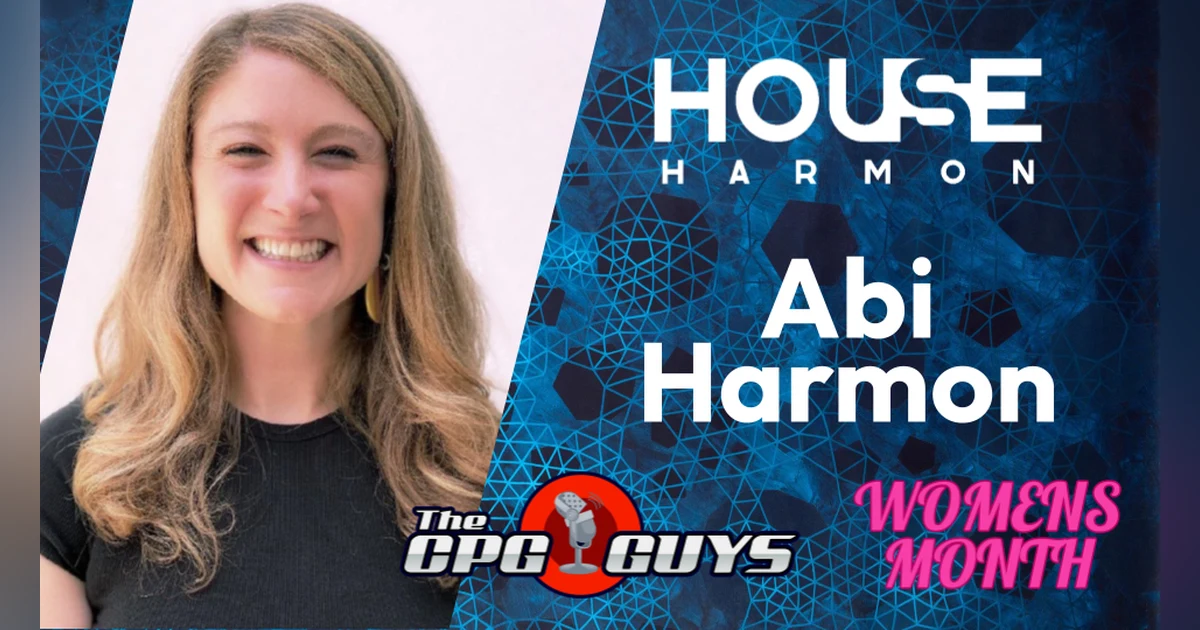
 It’s women's month on the CPGGGUYS. Every year in November we feature only female executives, startup founders and leaders from CPG brands and retail on the podcast.
The CPG Guys speak to Abi Harmon, Founder & CEO of House Harmon, a commerce consultancy & Former CEO of Perpetua.
Follow Abi on LinkedIn at: https://www.linkedin.com/in/abi-harmon/
CPG Guys Website: http://CPGguys.com
FMCG Guys Website: http://FMCGguys.com
CPG Scoop Website: http://CPGscoop.com
NextUp Website: http://NextUpisnow.org/cpgguys
RetailWit Website: http://retailwit.com
Rhea Raj’s Website: http://rhearaj.com
DISCLAIMER: The content in this podcast episode is provided for general informational purposes only. By listening to our episode, you understand that no information contained in this episode should be construed as advice from CPGGUYS, LLC or the individual author, hosts, or guests, nor is it intended to be a substitute for research on any subject matter. Reference to any specific product or entity does not constitute an endorsement or recommendation by CPGGUYS, LLC. The views expressed by guests are their own and their appearance on the program does not imply an endorsement of them or any entity they represent.
CPGGUYS LLC expressly disclaims any and all liability or responsibility for any direct, indirect, incidental, special, consequential or other damages arising out of any individual’s use of, reference to, or inability to use this podcast or the information we presented in this podcast.
Hello and welcome to the CPG Guys Podcast, set at the intersection of commerce and tech. Your hosts, Shri Raja Gopelin and Peter V. S. Bond, explore how brands and retailers engage consumers in a digitally driven world. And now, here are the CPG guys. Today's episode was recorded in September. Our guest has since departed her role at Perpetua and is no longer representing the company. Hey, it's PVSB, and I am in Seattle this week. I'm attending my very first Amazon Accelerate conference. And I figured while I'm here, why don't I cut some episodes? And of course, coming top of mine, you know that when I'm not podcasting, I'm working at Flywheel Digital. And one of our sister companies, Perpetua, we have their CEO with us today. So I want to welcome to the podcast my friend Abby Harmon.
SPEAKER_01Hey, Abby, how are you doing? Hi, it's Peter Dix for Happy.
PVSBWow, it's so great to be here in this office. It's lovely. It's right downtown. It's close to everything.
SPEAKER_01And it's even rainy today. We wanted you to have the Seattle feel.
PVSBThe full effect. Having grown up in Vancouver, I I feel the pain. But yeah, I absolutely know what it's like. So this is really great. I'm glad you're I'm glad you're able to take some time out of your day. I know Amazon Accelerate starts tomorrow and Perpetua is going to be very busy. So glad I could steal you away for a couple minutes. So why don't we, before we get into the questions I have for you, why don't you share with our audience a little bit about what is Perpetua?
SPEAKER_01Absolutely. So I've been with Perpetua a little over a year now in the CEO role for just about five months. And I continue to be sort of dazzled by both what Perpetua is today and the vision of what we're building continually for the future. Perpetua is a SaaS organization and our product really helps customers express a goal to deliberate growth through retail media online. So that allows you to really think about the capabilities of what you are driving across search and display and some of the auxiliary capabilities around Amazon and other retailers. And just a really simple and delightful product to be able to achieve whatever you're expecting to drive through those advertising vehicles.
PVSBThat's very helpful. So that kind of leads me into my first question. It was in what, roughly 2014 or so. Amazon announced that they were going to get into the advertising business. And a couple of fellows that we know decided to form a company called Flywheel and started getting into this space. So my question is in the US, Amazon's the 800-pound grilla. There's no question. But in recent years, that doesn't seem to be the case. When you talk to brands, is it all about success on Amazon or are there other marketplaces that are starting to bubble up as being interesting and what's going on there?
SPEAKER_01It's a really interesting question and obviously one near and dear to my heart because, you know, my origin before joining Perpetual is being part of Lywheel Digital and getting to see the advent of cert on Amazon and this sort of seamless ability to connect the investment that you're making with a retailer exactly into kind of the proof of the thing and how it was deliberating against sales and then growth. You know, it really revolutionized how we think about advertising and the linkage of media spent to retail growth. And it's been interesting to be in this space now for longer than I want to admit, over a decade, and see, you know, how are other retailers going to continue to capitalize on the fact that consumers are online and continue to invest in advertising vehicles of their own. And what has been really interesting for me, going deep with Perpetua, is we really serve a different type of customer profile and maybe slide-wheeled in with a very sophisticated top 10 enterprise manufacturer whose core sales and delivery happens brick and mortar. For a lot of our Perpetua customers, they might not have traditional physical distribution in the brick and mortar stores that we're all used to working with. And so the role of marketplace becomes really important and why Amazon has been such a significant growth driver for them. And so when I think about sort of where other retailers are, a lot of times their own investment in D2C is a significant portion of their portfolio. And so they're really thinking about growing and they have a lot of sophistication in SEO and how they invest and search outside of retail. It's also why retailers focus on marketplace becomes so important in terms of expanding that distribution. So I would say that Walmart is probably the closest to Amazon in terms of really focusing and investing in what does a marketplace strategy look like? And how do you enable really amazing products to find consumers online outside of physical distribution and outside of a necessity to have both a physical and online presence that are linked? So that on the strategy matters, but I actually see a much more interesting dynamics coming from someone like Shopify, who's also a Toronto-based um of organization, but really thinking about the entrepreneurial technology spirit of how do you reach consumers? And it doesn't necessarily have to be through traditional physical distribution. So we've even seen that a lot of manufacturers and brands are able to build their presence through social. Um and so the creation and connection of consumers via Instagram, via TikTok, um, and the ability, honestly, to both find that consumer and then have them be able to check out and buy those products without ever going to a retailer. It's why honestly you see Amazon investing in something like BioCrime. Um, that's actually a competitive dynamic more to Shopify than it is to the traditional retailers that you would think of as their competitive set. So for me, it's kind of fascinating to see the growth, but I still think that Amazon, especially with their transparency and focus on data, continues to be a first mover almost on all of the dynamics that we're talking about. Um, and is still absolutely the retailer to watch, which is why I think this week is going to be so exciting.
PVSBSo when I think about what big-scale brick and mortar traditional brands have done, they've invested very heavily into some degree ensconcing their dominance in brick and mortar, right? They invest heavily in sales and marketing agencies and category managers, all these things that make them the trusted partner. How does the online world, marketplaces, Amazon, Instacart, how does how does that level the playing field, particularly around advertisers that lets challengers actually succeed in a world where in the physical existence they would they would be challenged even to get a single skew on a shelf?
SPEAKER_01Well, yeah. So I think it's so fun. A lot of times in this space, we really talk about media and advertising and brand awareness and how brands are finding their consumers. But it oftentimes boils down to what is, I mean, I I think is a very sexy part of the equation, um, which is logistics. So even when I think about traditional written order and the success and scale and growth that large manufacturers have a lot of the ways that they've been able to create scale, drive profitability, really find their consumers now, honestly, globally, has been because they're so focused on running an efficient. And I think my mind was blown when I, you know, I spent two years at Kimberley Clark. I love Kleenex. I was like so god and ho to work there. And it was fascinating to both see one, the scale of teams that are all supporting one unified customer, but also the investment and focus on forecasting and demand planning and the uh the skew rationalization, i.e., like how much do I need to sell on something to make it worthwhile to run the line on this specific SKU. Yeah. And so I think what's really exciting in the world of online commerce and for brands that might not have that type of distribution is it totally turns the logistics and unit economics kind of upside down on how you think about building and growing for profit. You may be investing in a very different component of the supply chain, um, like how I send ages to consumers. Yeah. Um, and the way that you see that at scale and where you invest also looks different. But the ultimate responsibility of using data to understand like how am I connecting to my consumer, where am I spending, like that part is absolutely the same. But it's kind of put a pressure on entrepreneurial brands to really think about how they build a sophisticated and lean in-house team to deliver category insights, to think about advertising vehicles. And it's kind of a special place then of where Perpetua really fits into working and helping these manufacturers and brands grow and deliver because the need for technology to think about like where am I serving and what's the return that I'm getting on that investment, to understand what is happening in the category, because we all know, you know, at a traditional brick and mortar retailer, doesn't go and you can scan the shelves. You can see what else did a buyer bring in. You can see um how they're thinking about high bit labeled, you can see the impact of what gets put on gets put on an NCAP. Um, but translating that to the endless aisle on Amazon can be very complex. The contentive set obviously looks very different. The breadth of what the aisle is and the amount of search queries that a consumer is potentially exploring in order to find your product, the massive amount of data becomes so much that you have to use technology to really think about how do I dig into those insights? How do I use AI to really help me generate a recommendation? How do I put a little bit more trust into the hands of products that are going to help me best find that consumer across the area of data that's happening in real time, that's changing every hour. Yeah. So it's a I personally think that the success becomes so much larger, but the need to have sophistication and technology also grows. You know, Amazon is ultimately technology. Think of them as a retailer, but that certainly has changed. And so the niche sort of technology against technology becomes that much more paramount for an emerging, disruptive, fast-moving brand, because they don't necessarily have this structured scale of dominance and having those work and order relationships.
PVSBWhen I think about the winning the buy box, that's the term we use in digital commerce. It's getting them to click, add to cart, and convert and buy. In the physical world, they're in a store, they grab the product off the shelf, they put it in. At that point, when they're first trying a product, the product itself is what will determine the repeat. Winning the buy box in a digital world is not the end of the journey. It is very much the beginning of the journey because you've got to get that product there. And what I heard you say is brands have to be very focused on thinking about what that fulfillment process is. Does it meet the and exceed the customer's expectation? Because that's what will drive as much of the repeat purchase. If the product comes in bad shape, it comes six days late, the retailer may get some of the pushback from the client, but they're from the customer, but they're still going to shop that retailer. Right? The brand's going to be the one that takes the hit. So what I hear you saying is you spend a lot of time trying to help these brands figure out what they need to do after they win the buy box to make sure that the customer is satisfied and you can measure that in a closed loop environment and see what their repeat rate is and how they're repurchasing. Yes.
SPEAKER_01Let me break that into two because um what I think is very exciting, what's changed over the last few years, is that you're starting to see in traditional retail that a buyer is actually looking at what is successfully winning online in order to make decisions on what maybe I'm going to bring into my store based on what I'm seeing with customer data graphics. And, you know, do we have something missing in our assortment that actually is super popular online? Because they are also obviously looking at short share and other data insights to make sure that they're driving a portfolio that is what to capture consumer demand. And then there's also pieces when a consumer is going into traditional retail, maybe they're going to an aisle and they're like, I have no idea which of these products I really want to buy. They're sure as hell going to open up their phone, look at a retailer like Amazon or Walmart and look at ratings in reviews, you know, look at more content and make sure that they're making an informed decision, particularly for something that's a higher price point or is a more complex purchase. You know, they're arming themselves with data versus just kind of I would say in the past there was almost this trusted dynamic with, hey, I love Target and I'm really going to trust that if they have one brand on this, that that's the trusted cue, and that's the one I should buy. And I love that, right? It's like cost of private label or still some of my favorite items, like the the bar there is so great. And there's that trust between consumer and retailer. Yeah. But you're right, here you're not necessarily as a brand having to worry about the trust that that consumer has with the end retailer, and in this case, it eats Amazon. You're also having to engage and work with that. And so it's thinking about how do I both find that consumer? How do I make sure that my item is able to be for just this winning the buy box? Yes, but you know, I want to have strong logistics. I I want to make sure someone can get my item with Prime. I need strong ratings and reviews, I need how they amazing content. Um, but then it's once I know I have all of those conversion dynamics in play where if someone hits my detail page, they're gonna buy the product. How do I get them to explain that detail page? And that's a lot of the work that we do, which is okay, and especially if you're really lean at how you're sending your advertising dollars, making sure that you're spending them in a way that it's gonna drive conversion. Um, but then it is this constant iteration of making sure that you're using the data to adjust and pivot.
PVSBThere's a balance between cost per click and the actual conversion, yes. And you have to decide what is right for what you're trying to accomplish. And that's really where you you help clients figure out what they're doing.
SPEAKER_01We'll really look at basically the total cost of the sale and kind of understanding, you know, what are all the mechanisms that are going to go into how much you're willing to have, how much you are willing to pay for someone to click and convert on that product, and then how to make sure that all the places that you're serving where you're investing uh and they will need to have that really strong tough ghost.
PVSBSo the if if I if I'm a brand and I set up all of my capabilities to support my product display page on Amazon, can I just turn that around and put that on Walmart and Target or Instacart? It doesn't work that way, does it?
SPEAKER_01It doesn't work that way. You know, consumers will search. I think in the grand long-term vision, what everyone maybe has that saying Endless Isle and everyone has a really strong marketplace, there'll probably be a continued convergence of half consumer search. Though frankly, we're also seeing Amazon do a lot of personalization in search. So that then creates, you know, this large dynamic of data. Search is all supposed to be helping a consumer find what they're looking for. But making sure that you're really understanding of how a consumer search within this specific retailer becomes really, really important because then how you're thinking about the content that you show, the dynamics that you have within your bullet points and your product description, even your title, all of that is really essential. And the obviously perpetuous is very much focused on how do you deliver strong at events. But the sort of critical first steps of the work are as a brand, making sure that you're thinking about do I have strong content quality that ties into how I know a consumer is going to be locating a product. Um and it's it's yeah, it's interesting. In my early Amazon days that are now even 12 years ago, the split between browse and search was and that's because folks just really genuinely didn't even know like what is Amazon had to sell.
PVSBI still wonder what Amazon has to sell sometimes. It can be real I mean, on Prime Day, I feel like I don't, I I'm not doing myself justice. There's stuff and I I'd read articles, what I've started doing. I just started doing this, and I'm sure that like uh Peter, you're a Luddite, have me doing this. I just started adding things to my basket and putting it into save for later so that when Prime Day comes around, I look at what's in my basket and save for later. And if it's on deal, then I buy it.
SPEAKER_01About that. It's actually a really good deal.
PVSBMe, yeah. Um, yeah, I mean it's it I mean, it's just fascinating when I think about where this is going on. What I hear you also talk about is when we think about traditional on-site advertising, right? That's very much in the marketing funnel of mid to lower because they're already, they're searching for something, they're in the consideration phase. But for brands that really want to grow, that are in a niche category or don't necessarily, a lot of people out there may not know. Like, I'm constantly, there are things that I'm I need in my world that what is the right search term? It took me like just just to find an online site that would scrape all of my LinkedIn followers and dumped in the new Excel spreadsheet. It took me like five months to figure out what was the right search term in Google to find that product. So I've got to imagine that's the same. So my so when I started thinking about uh I'm a brand and I want to build beyond just people who are searching for my product. Yeah. I want to move more upper up in the upper in the funnel. Now, traditionally, the way that brands built awareness is they would get an advertisement on the Super Bowl. Like that was the ultimate most expensive, but it was very much upper funnel awareness. The reality of today's world is that particularly Gen Zenials. Is that now I think that's an official term? We can use Gen Zennia. I heard that the other day. Now there's a new one I love. That they're cutting the cord. They're no longer, I don't, I don't have cable in my house. I have internet. And last time I checked, I don't get the New York Times delivered to my doorstep. I read it online. So I'm not getting that FSI freestanding insert. You know, we break down acronyms here on the podcast. So the FSI is not coming through. So the print media and linear television are waning in terms of their impact. So you've got a whole lot of brands that are really anxious to create our upper funnel awareness. So that is where the emergence of these demand side platforms or DSPs become important. What why don't you talk a little bit about how Perpetua helps brands achieve that objective of finding new audiences?
SPEAKER_01Yes. It's uh I think this is a really fascinating space. In particular, when you think about you've so many big brands were spending millions of dollars on upward funnel advertising tactics, but you also knew that that consumer could easily go to a Walmart or a Target anywhere within the United States or North America and find the item.
PVSBYeah.
SPEAKER_01And so with this advent both of broader reach at online retailers, more manufacturers and brands able to find consumers and then demand-side platforms, it kind of gives more access to brands that wouldn't necessarily be able to invest in those types of advertising vehicles or have the distribution opportunity honestly tied into it. Um, but I think you know, there's concept that I that PG created around like this idea of mental availability. And, you know, if I can put an item in front of someone, they might out of it either realize that they get that item, but suddenly poof, they realize that they do. And so DSPs really allows you to find the consumers that might have interest within your products, um, but are necessarily already down in the phone where they're searching specifically for it.
PVSBUm and I think what is very exciting about AMC or Amazon Marketing Cloud and cleaning rooms in general, just just really This is not this is not where I keep my household cleaning products or my all my SC Johnson and my all that that's not the room. We're talking about something completely different.
SPEAKER_01One that's never had a clean ringle. Um these are like the ones. That I actually really enjoy and find fascinating. Don't make me fold my laundry, that's for sure.
PVSBNo, these are these are privacy-safe environments where data from different disparate sets can be commingled to yield better results. And ideally, in the case of digital marketing, to build behavior-based audiences, which is a lot better than demographics. Like trying to target something I've you I've I've gone on, I've quoted chapter and verse on this podcast about income indicates a capacity to buy. It does not indicate a propensity to buy.
SPEAKER_01Yes. And if you're lean and sensitive to how you are investing, um, and frankly, some of the the levels of and layers of sophistication in investing in a DSP, it's definitely a more complex vehicle because you're typically paying based on impression for it can be really easy to overspend and not realize return. And so something like AMC and seeing room data allows you to have this precision of how you're thinking about interacting and reaching the right consumers. And then frankly, it's this full circle of okay, I've reached out to these folks, I've shown them this delightful product. How do they convert? How am I able to see the sort of connection that I'm having with that consumer and how it realizes back into the growth and sales that I'm looking for? And it also allows you to have much more precision on other investments that you might have. So thinking about how many times is that consumer going to purchase my product? Or am I a high-vscribe and save or repeat purchase item? And, you know, I either want to convert someone into that program because we know once they're there, they're super stiff.
PVSBOh God. The the opt-out rate of subscribe and save. Like if I'm a brand manager, why I am not channeling every dollar I can into subscribe and save on a retail. I don't care if it's part of the trade. Once they're they're into the brand, they're not leaving that brand.
SPEAKER_01Yes. And I it's still interesting because in my, you know, the the category that I launched in my Amazon days before I left was Pet. And I'll say it's subscription data. It's really messy to find. Like you got to know the right database that it's located in. You still need to use SQL. Um so the fact that a lot of that subscription data is now available. And, you know, Petra has specifically created some AMC audience capabilities using that data. It's so powerful. It's worth the initial high investment of promotion to get someone on the program. It's just, it's one of those programs that's sort of mind-boggling your any type of recurring product field that if if you're not investing in that, it absolutely should be something that you're focusing on. And if you're not thinking about how my connecting to consumers that have maybe bought my product once or twice and aren't on subscription, how do you make sure that they find that product and sort of lock that into it? Because the lifetime value of that consumer in creating that dynamic is exactly so.
PVSBLet's open up the hood because you talked about a capability. What exactly is it that the marketing cloud allows you to do? Like there are there, my understanding is that Amazon Marketing has very few limitations. Its primary limitation is you cannot build an audience that allows you to identify an individual household. But short of that, your ability to think about all these, what are all the different data points? Like what I heard you say is that they put it in the basket, but they didn't buy it. Or they bought it twice, but they aren't subscribed. All of those are signals. They're all signals. And you can use those signals to create audiences. Now, you don't want to make an audience that's so small that it's three people, because like that's not scalable. But ideally, you can use all these signals to create meaningful audiences that you can then target for advertising and measure performance. Am I am I?
SPEAKER_01I will say, you know, the D Amazon's DSP in particular already has a lot of targeted capability in it that really allows you to think about, you know, bottom of the funnel, I'm retargeting, I'm trying to convert someone.
PVSBSo abandoned baskets, things like that.
SPEAKER_01Exactly. But I think where AMC kind of adds this like extra juz on top of that is again that ability to have even more data based on consumer types, because you're actually then seeing it's again, it's anonymized, but you're able to see the specific activity of consumers and kind of create this extra layer of precision on top of that targeting that you're already doing. So maybe within TSP, you're thinking of targeting based on the Amazon, like customers that have looked at this have also looked at this, or maybe I just this and I want to look at this, or you know, I can sort of I can look at it based on SKUs and I can look at that type of behavior, but AMC on top of that is actually the consumer information versus just the demographic. And so putting them together allows, again, just a more granular way that you can really think about how am I interacting and connect to a consumer, I have to say, for the sake of acceleration sort of the types of customers that we work with. Sponsored displays also a great way to go up funnel and um and reach consumers even before here we'd be getting as sophisticated in looking at these specific audiences, the DSP and AMC audiences. But all of this is basically saying, like, wow, we can now really understand consumer intent and hopefully delight them with the ways that we are showing them products that are going to make it so much easier for them to know, like, oh my gosh, I didn't need that. I was looking over here, I was, I was overwhelmed, I left the site. Oh, that is exactly the item I was looking for, and you know, placed it in front of me in a very tangible, discoverable way. And now you may actually also link all of that activity map to the exact measurement and attribution. And that's the part that I think is really exciting is you know, spending dollars on advertising and trying to reach consumers via demand side platforms. And that's been around for a while. The ability to measure on the back end exactly how that consumer is interacting with the product for a year, you know, across the life cycle of the item or the person, um, it's it's at a different scale that just allows you to be so thoughtful in the investment that you're taking.
PVSBI've got to imagine that a significant percentage of your customers that are selling through Amazon are also operating their own direct consumer site. So how does the data that they are collecting can it can they bring that into Amazon Marketing Cloud? And what can they learn from that? Like what is what does AMC allow them to do to help them better understand their own customers? What's going on there?
SPEAKER_01I mean, I think what's people crazy in this era is it's not like AMC is necessarily giving specific recommendations. It's just it's exactly a way to say, hey, here's all of this other customer data that I have. Here's, I mean, Amazon is the most powerful retailer in terms of the customers that they're also interacting with. And I can actually start then putting these different sets together where maybe I am finding that consumer versus on social, uh, but they're actually converting on Amazon. Suddenly I can see those pieces together. Okay. Maybe I know that um someone coming into my brain will come with a um lower profitable SKU. But once I'm able to capture them and maybe that happened through V2C, I get upsell them on the all these other items. And so it creates the sort of scale of this growth that inside that customer can be much larger on itself. For us, starting to put some of that data scene data and other components within that universe together, you start to get to cleanly and clearly see what is the cost of acquiring that consumer and then what is their life value. And you said it, if like these are magical, mythical, you know, metrics.
PVSBUnicorns and yes, I be doing that.
SPEAKER_01Like we've been talking about the advent of Mad Men, right? Where you're like, what is the mountain consumer and how do we know? And this sort of also focused at times dynamic of like an MNN or a market mixed bottle where you're trying to.
PVSBI think that was alchemy. Yeah. I, you know, I felt like it. They they'd say, Oh, it's a little bit of this and a little bit of that. I'm like, come on.
SPEAKER_01And that's the thing is with the clean room where you actually have all this specific consumer data, you can actually start to see like, what is the cost of acquisition? How do I make your end profitable? And how do I keep scaling up and growing with the consumer, be specific on what I'm trying to sell to them, but also know the value that they bring to my room yet?
PVSBSo, in addition to obviously brands wanting to know about how they're performing, they also want to know how everybody else is performing. So, how how does Perpetua help brands understand the overall market intelligence landscape?
SPEAKER_01Yes. It's certainly in a world of an endless aisle, it makes it a lot more complex to know who your competitors are, what their competitive set looks like. And Perpetua in particular has a product that needs now brought into the general release that's called Prism. And it really allows you to understand within the category. And a category looks very different online than it might be in how you traditionally define it within the Everybody has you would be thrilled.
PVSBYou would think like Coke and Pepsi both understand what carbonated beverages are. Having worked with both, I can tell you that the Venn diagram, there's a big overlap area, but there are there are differences even in how anyone looks. I look at like think about picture hooks versus bathroom hooks. They can do the same thing, but they can be merchandised completely different areas of the store. And finding them can be a challenge.
SPEAKER_01Yes. And I'll say, Ethan, I've been going to see for so long that that traditional brick and mortar retailer, how they think about category intelligence and share data, they want the denominator to be the same online as what they're used to looking at within their traditional brick and mortar spaces. Because no one has necessarily wanted to say to their executive, like, hey, I have 20% share in Walmart and I have 6% share on Amazon. But I would argue that is that much more important to know like what, regardless of what you think of as a category, how does a consumer think about that category? Um, because maybe bubbly water in one place like actually really matters to the shopping experience and might be a trade-off or, you know, a soda that wouldn't necessarily exist based on the shelf that you're looking at in traditional brick and mortar. So Prism really helps to understand what are the categories that you should be looking at. And that's going to be true with how the consumers thinking about the category, not necessarily what you think the item is within that denominator figure.
PVSBDon't tell brand markers. They think they know exactly how people think about their products. And it's shocking when they find out consumers think in is it a self-serve? Is it a highly templatized? Is it a just here build your own spreadsheet? Like what is what is it that gets them into this?
SPEAKER_01It's completely self-serve, and you can look at it basically on search queries or on SKUs and sort of how you want to define that category. Um, so either we could sort of say, like, here's the broad category, or you can actually create your own niche saying, like, here are the SKUs that I want to look at and that I want to understand the trends in this category, what's popping up on those search queries, how are things growing. And it really allows them to go very deep at understanding promotional activity, elements like inventory, how folks are investing both off-site and on-site. And it's a great place to start where if you are seeing a slowdown of sales or you know, you're you're sort of trying to figure out anything within your known to the breed, it allows you to say, like, hey, here's entrance that you didn't even realize are starting despite what's some of the activity that you're driving.
PVSBYep.
SPEAKER_01Um, and then what I think is really exciting is that and start to then late that intelligence back into the advertising strategy that you were driving. So maybe you see someone else is getting very wrecked in promotions. Um, do you want to pull back and how you're investing in search because you're not going to sort of lead that pricing dynamic? Or do you want to get more rusted in making sure that your skills are showing to your consumer base? So it starts to tag how you are investing in that game ability to the consumer, to all the other dynamics that are happening within the category.
PVSBI mentioned at the beginning of our conversation that we're here in Seattle on the eve of Amazon Accelerate. Can you share with our audience what is Amazon Accelerate and why has Perpetua decided to be a principal partner in sponsoring this event?
SPEAKER_01Yes. So I think Amazon Accelerate, I'll admit, wasn't a conference I knew as well about in my previous enterprise, very vendor-centric world. And that's because Accelerate is really more focused on the disruptor growing seller market. It is some of the most sophisticated brands and realizing how to unlock the potential of the massive consumer base that Amazon has. And it's a specific event really tied into making sure that this larger seller community knows the advanced capabilities that they can work with Amazon on to continue to grow their own brands. And, you know, it's really a way to have kind of a first mover in knowing what technology is coming out. It's a great way to network and understand sort of what the market in general looks like. It's a fantastic way to have that connection with your advertising tea. Um, and there's so much amazing content. So it's really a chance to have this deep knowledge of all the components of Amazon that are going to allow you to grow and succeed with business on Pinball at your fingertips and in one bias, but one lovely city. So it's it's a great conference. And even though it has more of that stellar centricity, I would say it's equally important for more traditional brands to keep a close pulse on what's happening within this world because there's a reason that a stellar group on Amazon is just so much more dramatic than what you might see with traditional uh more brick brick and water-centric brands because they're capitalizing on these capabilities. They're really sophisticated in how they're using data. Um, they're constantly learning, innovating, doing tests and learns. Like they're so simple. And the amount of intel that they get at a conference like this is helpful to an eye on because it very much tells you like, where's the prioritization of where Amazon is investing, where's the prioritization of the retail growth going to happen? And how should I, as a brand, think about where I want to invest continue to grow this powerful retailer?
PVSBSo I think then accelerate is much more, as you said, for the challenger brands, the ones that are digitally native, understanding the powerful capabilities. Not, it's not like going to the old Expo West natural products expo with a lot of mom and pop operations. They may be small, but they're sophisticated. And then I would I would differentiate Accelerate from the next event that Amazon's going on in New York in October. That's unboxed. That is much more for big agency scaled brands and talking about those capabilities. So this is much more. So that's why Perpetua is more focused on Accelerate, because it's to the heart of who your client base is, yes?
SPEAKER_01I will say we also are a platinum sponsored for a Okay.
PVSBWell, that's good then.
SPEAKER_01As a significant portion of our business, it's working very hand-in-hand with amazing agency partners. Of course. And you know, our agency partners both support disruptor, um, more traditional seller brands, but we also work with agencies that deliver excellence kind of at scale for um more sophisticated enterprise brands as well.
PVSBI've got to imagine that when I look, I mean, big brand, big consumer package goods manufacturers are not monolithic. They have a portfolio of brands, some of which are the multi-billion dollar brands, but some are ones that they're trying to grow. And you know what? Maybe the full-on managed service solution that they're giving to their flagship brand is not necessarily justifiable for some of the emergent brands. That's where you come in to help them grow.
SPEAKER_01Yeah. And it's so interesting because I think there's there's a real cyclical dynamic of a brand wanting to have a full in-house solution and realizing that they might not have the depth of knowledge or resources to do everything themselves. And they'll sort of ping-pong between I need this full service support, I understand I need to outperson this, and I want the technology, the product capability in-house to be able to deliver. And that kind of can can ebb and flow based on honestly the scale. And it might look very different for a flagship brand versus uh, you know, a smaller brand in the portfolio that may almost seem more of a disruptor. It's also interesting because we've worked with a lot of what I would say are more disruptor brands that have got to such a scale where they've been acquired by a large C BG. Of course. And then we've seen that large C BG start to adopt and replicate the strengths of that disruptor emerging brand into some of the other more traditional.
PVSBThere's a reason there's a reason they won in the online world to completely subjugate that to the to the scaled national brick and mortar brand would be a disservice to the entire enterprise. So I can see why you say that. So my last question for you, Abby, is I'm constantly impressed by the outward expression of Perpetua's culture and its social media, in all the activities. It's like I feel like I'm I've got a huge FOMO. Granted, I I'm I'm a remote employee for the larger flywheel. I'm in New Haven, Connecticut. I when we go on an office outing for lunch, it's me. But I really am excited. I'm also an, as I mentioned you earlier, I'm a I'm a Canadian expat. So the fact that Perpetua has its roots in Toronto, always exciting. Love seeing the pictures with the CN Tower in the background and going to uh going to Blue Jays games. But like I'm curious, how do you maintain that really excited? How do you, you know, I never think of culture as an input, it's more of an output. So to do that, what is it that you foster to really create this exciting dynamic culture that gets people really excited and matches the excitement in the brands that you're servicing that are challenging, that are growing at rapid rates. What is it about it?
SPEAKER_01Yeah, I mean, I I think um there's very much a startup mentality, even as we scale and become honestly at a much larger operational break size, because we're truly helping startups, founders, businesses that are just trying to capitalize and win in this very complex space. And I think that's incredibly gratifying. I also think that one, culture is something that has to be cultivated, owned by everyone, and thought about on a day-to-day basis. And the bar-raising talent of our organization honestly is something I have rarely experienced in my career and is something very special. It is very much an artistic, creative, incredibly intellectually curious organization. And why I love um the close partnership that we have with Sigling Grant Flywheel, because that curiosity and desire to learn, innovate, and think about new ways of working, I think is something that really exists across both organizations. But keeping a mindset of innovation and, you know, one of our principles is scareless ties in. So this concept of continual improvement, of seeing that something isn't quite working the way that we expected it to, and be willing to challenge even try a new way of working. That's very much a part of our culture. You know, I think for me, coming in as a woman CEO, which is pretty rare in these gang uh in the in this sort of world, and um, also coming in as someone that is admittedly more of an emotional heart first uh person and then a sager and an analytical brain second, creating a space where folks can be authentically themselves is is really important to me. At that sense of innovation, I think can be discovered and cultivated in a world where folks aren't able to be very, very authentic. Yeah, it's it's an incredible organization, um, one with a ton of growth ahead. And the other thing that I think is such a differentiator for us is you know, Amazon revolutionized retail in creating a space where anyone could list an item. And for Perpetua, the focus on how do you simply express what your goal is and let the technology really help you with that creates a dynamic where we're really lowering the floor and raising the ceiling to let someone that might not have a lot of dollars to spend, that might be a small mom and pop startup, the same opportunity to grow and take advantage of this space as any of the big brands. And I think that's something really special. It's something that is very motivating for me and for the team. And I think that mission continues to have us focused on where are we continuing to grow up.
PVSBAbby want to thank you for taking time uh as you prepare to head over for Accelerate tomorrow to speak with me. Um, it was really great having this chat with you. Yes, that's to our audience. Make sure to visit cpgguys.com where you can find all of our content. Our episodes are filterable on topics like retail media, AMC, insights, whatever you're looking for. We've probably got a filter for it so you can find lots of great episodes. You can educate yourself, and hopefully you find it a little entertaining. And we look forward to speaking with you on the next episode of the CPG Guys podcast. Goodbye.