
RBC Capital Markets’ Nik Modi - Modi’s Musings: Themes That Will Define the CPG Industry


 Apple Podcasts Apple Podcasts
  Spotify Spotify
  YouTube YouTube
  Overcast Overcast
  Amazon Music Amazon Music
  Audible Audible
  iHeartRadio iHeartRadio
  Castro Castro
  TuneIn TuneIn
  RSS Feed RSS Feed
  Audacy Audacy
  Castbox Castbox
  Fountain Fountain
  Goodpods Goodpods
  PlayerFM PlayerFM
  PocketCasts PocketCasts
  Podcast Addict Podcast Addict
  Podchaser Podchaser
  Podurama Podurama
  Podverse Podverse
  Podyssey Podyssey
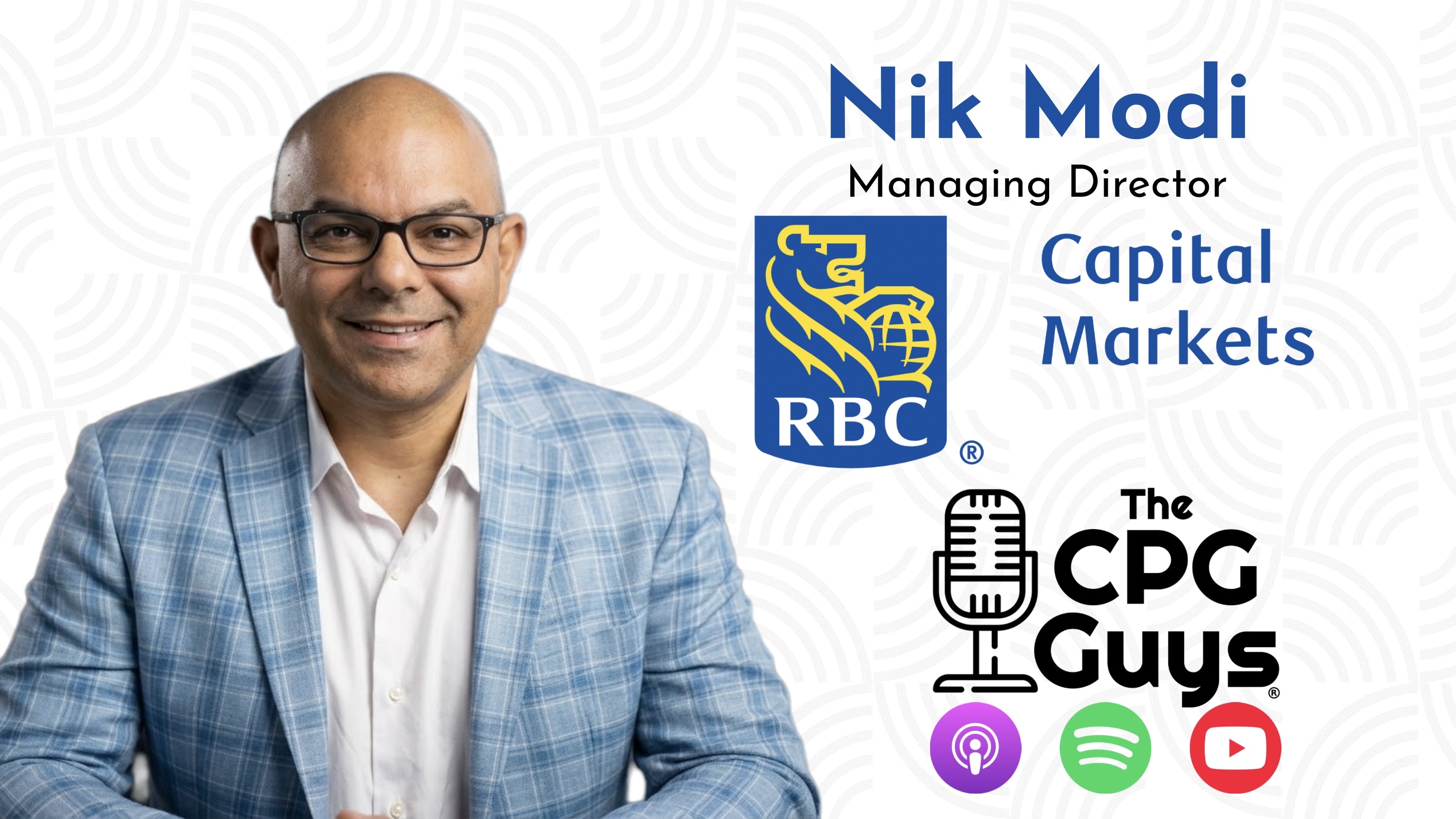
 The CPG Guys are joined in this episode by returning guest Nik Modi, Co-Head of Global Consumer & Retail Research at RBC Capital Markets for Nik’s recent release .
Follow Nik Modi on LinkedIn at: https://www.linkedin.com/in/nik-modi-675926/
Follow RBC Capital Markets on LinkedIn at: https://www.linkedin.com/company/rbc-capital-markets/
Follow RBC Capital online at: https://www.rbccm.com/en/=
Nik discusses these themes from his recent release of Modi’s Musings:
- Cultural Relevance > Brand Equity
- Crisis Capitalism is Here
- K-Shaped Economy is Structural
- Synthetic Shoppers
- Occasion vs. Category
- Longevity-as-a-Service (LaaS): Revenue Whitespace
- Shifting Superpowers Influencing Consumer Trends and Business Models
- Global vs. Local
- Real as the New Premium
- New Revenue Streams / Business Models
CPG Guys Website: http://CPGguys.com
FMCG Guys Website: http://FMCGguys.com
SheCOMMERCE Website: https://shecommercepodcast.com/
Rhea Raj’s Website: http://rhearaj.com
Lara Raj in Katseye: https://www.katseye.world/
DISCLAIMER: The content in this podcast episode is provided for general informational purposes only. By listening to our episode, you understand that no information contained in this episode should be construed as advice from CPGGUYS, LLC or the individual author, hosts, or guests, nor is it intended to be a substitute for research on any subject matter. Reference to any specific product or entity does not constitute an endorsement or recommendation by CPGGUYS, LLC. The views expressed by guests are their own and their appearance on the program does not imply an endorsement of them or any entity they represent.
CPGGUYS LLC expressly disclaims any and all liability or responsibility for any direct, indirect, incidental, special, consequential or other damages arising out of any individual’s use of, reference to, or inability to use this podcast or the information we presented in this podcast.
SPEAKER_00
Hi, I'm Nick Modi, Managing Director at RBC Capital Markets, and you're listening to the CPG Guys Podcast.
PVSB
Hello and welcome to the CPG Guys Podcast, set at the intersection of commerce and tech. Your hosts, Shri Raja Gopelin and Peter V. S. Bond, explore how brands and retailers engage consumers in a digitally driven world. And now, here are the CPG Guys.
Sri
Hello and welcome to this special episode of the CPG Guys Podcast. And of course, Shri, your West Coast co-host and also CRO and co-founder at ThinkLook Consulting, your trusted partner in your Army Channel journey. Get in touch with me at Shri at thinkluconsulting.co. Please do listen to my younger daughter, Laura Raj of the band Cat's Eyes Music, who is now the proud winner at three AFMA Awards this year with a clean sweep a few weeks ago in Las Vegas. And of course, Papa Raj was there to see it live. I'm joined today by my East Coast co-host, co-founder of PVSP, who also moonlights his head of industry and client engagement at Flywheel, Commerce Acceleration Division of Omnicom. Peter, you just came back with me from NIQC360. It was great with the tip of can. Share more, brother.
PVSB
Yeah, we were down in San Antonio for the annual Consumer 360 conference. For me, it was great. I hadn't been in a couple years. I know you've been going consistently, Shri, for three or four years, but it was great. I reconnected with so many terrific people. Our dear friend uh Liz Buchanan, of course, I ran into some other people we've worked with on this podcast, Sherry Frey, who leads the health and wellness analysis, and Anna Mayo, who looks over the beauty space, and so many other great people. And I ran into an old colleague of mine from back in the day, Shree, who's now at Ibotta, a shout out to Deb Escra. So really a great time, some some incredible insights. And you and I got to close the show out. So we'll go on that, right? It was a little harrowing trip home. Read about it on my LinkedIn page in a week or so. Oh yeah. Nick, you don't even want to hear what they what American Airlines did to me. But in any event, Sri, it's good to be here recording this episode with our dear friend and one of the new recipients of the CPG guys five timer varsity jacket. He is looking dapper on the video screen. If you're not watching this, you should know. Our podcast is now available in video format.
Sri
I want to thank all of you that listen to us on our sponsors because without you, this podcast doesn't exist. Thank you, thank you, thank you. Make sure you're subscribing to our podcast on your preferred listening platform. We can get our latest episodes. Go back to consume some of the 600 plus episodes we've already published. And now let's get promoted, please, to our special guest. If you've been paying attention to the consumer staples market, you know that trying to solve new world problems with old school tools like most of you are an absolute KPIs as a direct ticket to long-term volume leakage and margin compression. Our guests' latest research explicitly details why boards and C-suites must pivot from viewing themselves as a legacy house of brands, very well said, to operating as a highly agile house of capabilities, and there is absolutely nothing better than when he comes on the air to look over the horizon and completely destroy legacy CPG thinking. This new piece, Modi's Musing, did I give away who the guest is, volume 4, 10 themes that will define the CPG industry over the next one to three years, is the absolute definitive playbook for a sector right now. But let's keep rolling, because we've got a masterclass to get to. Join me in welcoming back to the CPG guys. I repeat guest, the one we love, the industry champion, the Wall Street Wizard, or the Wizard of Wall Street. I like that more. The one and only, Nick Modi. Nick, welcome back to the CPG Guys in full jacket form. How are you doing, man?
SPEAKER_00
I'm great. I'm great. It's been a busy last couple of weeks and months, traveling all over the place, spending a lot of time with folks in the industries, but uh glad to be with you today and sharing some of my thoughts.
PVSB
Nick, did Shree and I actually see that beautiful face of yours when we were watching games three and four on uh was that way is that you in the stands? There's some reports that you might have. I will see if you're not sure if you care to confirm.
SPEAKER_00
Mainly because someone of my height should not be in a crowd size that large. Funny guy.
Sri
Unparent without parents. Funny guy. It's an absolute honor. Exactly. Funny guy. Humor never stops a little bit. Or a booster scene. It's an absolute honor to have you, Nick. Before we dive in, I want to remind our audience, check the digital show notes, please. You've got the hyperlink straight to Nick's profile, RBC's Corporate Insights. So you can access the research live while you listen. And while you're there on Apple or Spotify, Peter loves that word called five star, so we'd love five-star ratings indeed. And Nick, I'm gonna jump right in. I'm gonna jump right into the themes. I had a chance to read this cover to cover. They're awesome. So I'm gonna jump to theme one in your research report. And you called it cultural relevance is greater than brand equity. You boldly claim that legacy metrics like brand awareness, loyalty, share of voice are no longer reliable indicators of sales growth. Yet most brands are chasing them on their scorecards. Smaller brands like Liquid Death, ELF Cosmetics, and Poppy are hitting 100 million plus revenue on shoestring budgets acting as cultural infrastructure on TikTok and Instagram. If large CPG brands are losing to other big brands but rather to entities not old enough to wear thinking pants, how do legacy CMO structurally re-engineer their teams to prioritize unscripted cultural resonance over these massive linear TV budgets that they still hang on to?
SPEAKER_00
Yeah, well, first of all, I I think it's important to understand, you know, the brands that these companies have built over decades and decades and decades to some degree are their biggest strength, but also perhaps their biggest weakness. And I say that in a sense that a lot of these large brands can be very relevant and can grow, and we've seen many examples of that across the space over the years. Well, what I think has happened is that, you know, you have all these new opportunities popping up, and I feel like the companies believe that they have to leverage their brand equities to get into those spaces because it's the most efficient way of doing it or the lowest cost way. But I I actually disagree with that now. You know, AI has effectively collapsed the cost of new brand development. And so my thought is these companies should actually start building capabilities on how to build new brands. Because clearly acquiring smaller startup growing brands usually doesn't work because they get gobbled up and kind of, you know, smothered by the by the culture and the corporate infrastructure, right? And so I think these companies have to start, you know, getting out of the mindset that we must leverage our existing brands because of returns, because I actually believe they would get better returns if they start they started thinking about new brand development in some of these niches. And I'll give you a great example. Let's just take Coca-Cola as an example, right? Coke had Coca-Cola with fiber in Japan many, many years ago. So they were actually ahead of the prebiotic soda trend, right? They tried to enter the market here with some of their existing brand equities and it hasn't really gained much traction. Well, why not just create a new brand, right? You can still leverage your existing supply chain, you can still leverage your existing bottler network, but now you have a new brand and you can go digital first in terms of the brand development, right? Just like a poppy did, right? So it's like I I think even the a company as well managed as Coke has significant opportunity if they start reframing how how to think about attaching and uh addressing and attacking some of these emerging opportunities.
PVSB
All right, Nick, welcome back to the podcast. By the way, you know how Spike Lee gets over the whole issue of basketball games and stuff, right? He just sits in the front row. There's nobody, nobody, nobody gets in this week. Maybe if I had a couple hit movies, you know, I would have been there too. It would cost a little more.
SPEAKER_00
That's right. That would be helpful.
PVSB
There we go. Or or some big famous pop star daughters, right? Hold on, hold on. You know the sons of DJ. All right. I want to talk a little bit about this this frit Aspire.
SPEAKER_00
Yeah, he's not he's not hit that level yet.
PVSB
Uh that's why he's aspiring to to the the Raj the Raj family empire. The the Modi family empire is on the ascent, but it's not quite there yet, right, Sheree? Exactly. Don't we all? Don't we all, Nick? Don't we all? All right, I want to talk about this term cultural infrastructure. I really love that phrase. Let's look at your macro operational framework. Theme number two is called Crisis Capitalism is here. You argue the world now permanently oscillates between shocks, climate volatility, cyber attacks, and geopolitical fragmentation. Wow. Meaning the old playbook of just in time logistics and cost minimization is functionally obsolete. How do consumer staples companies successfully pitch to their boards on moving from efficiency optimization to redundancy and continuity architecture? And can you touch on this wild new revenue paradigm you call it? I mean archive.
SPEAKER_00
I think the reality is, you know, these companies over 30 years, you know, said, hey, look, let's consolidate, let's become more efficient, let's leverage our global scale. But we've we've walked into a world that's a lot more fragmented. And so the old model doesn't necessarily fit with the way the world is working right now, right? And later in this discussion, we'll talk about global versus local. And I think there's a really important point to be made there. And so I think the C-suites have to go to the boards and say, do we want to grow top line or not? Right. Because that's what it comes down to, right? Is that is your supply chain, is your corporate infrastructure, is your IT security, is all of that protected? Are you investing in the right areas? Because if you're not, you're gonna be exposed and then you're gonna have issues like what happened with Corex, and it's gonna impact your top line and it's gonna take time to get out of it, right? And think about it. If everyone is using AI now, I don't I don't know if everyone has safeguarded their corporate infrastructure for security, right? I mean, there there could be some real big emerging problems that occur because everyone in an organization is being used or being pushed to use AI without being provided the proper safeguards because this is such new territory. So we're in this world where things are changing. These companies are built for consistency of the last 30 years, not the volatility of today's environment. And that's why I think they start, they need to start investing. Now, look, let's be very clear. And I've had this discussion with many executives. There is no perfect world here where you can adjust your corporate infrastructure to be more agile and to deal with crisis capitalism while improving your margin profile at the same time. Let's just call a spade a spade. This is why I have been advocating for the last two years that companies need to really take down their earnings so they can reset, reassess, and recalibrate. That has not happened yet. It's happening in very slow, kind of death by a thousand cuts type scenarios. But I think it just needs to be, everyone just needs to take a step back and realize listen, if we were to white paper our company today, what would it look like? And I'm pretty sure it would look nothing like it looks right now. And then, Peter, to your point about our commerce, in a world of overlapping crises, why can't these companies with the most sophisticated supply chains on the planet create business models and revenue streams where they can guarantee supply, right? And at and at a premium. And that's just one example of resilience commerce.
Sri
Very well said, man. The thing I worry about, Nick, is these companies have so overoptimized their PNL. Where do they get the dollars to invest? Like I'm puzzled. Yeah. Unless they change their media plan, like they redo their media plan completely.
PVSB
I'll tell you my opinion. They they they do things like they go out that and over time they're buying back all their stock and then they do another stock and speed on that one. I think I don't know how these people have the point better than I do.
SPEAKER_00
Well, here, where do you find the money? That's that's my entire point is reset your numbers so you can have the money to do it, right? And that that's the main that's the main point I'm trying to make. But there are there are inefficiencies in the PL already. Like, let me ask you a question. Everyone uses this benchmark, depending on what industry you're in, you know, 10% uh marketing as a percentage of sales or whatever. There's like some threshold. Why is that threshold still relevant? I mean, there are companies that, like I said, aren't even in training pants in my report that are taking share from all these big companies that spend billions and billions of dollars on marketing for the same consumer, yet they're losing. So maybe there's a need to be a whole rethink. I mean, I'm doing a call next week on talking about the Korean beauty innovation model and how that could be a best practice for the entire CPG industry because they're able to get products to market between four and nine months from concept to actual product launch at retail, not DTC, at retail for under $10,000, right? So there are models out there that are much more efficient. If you want to find the money, you got to rethink your business processes because the money is sitting there. I believe that.
Sri
So, Peter, my next question is actually a future t-shirt that's upcoming with Nick's name, like we've done others. So, and it says continuity is the ultimate competitive advantage, which I believe has to be immortalized on a t-shirt quote. Nick, let's pivot to a major portfolio structural question, which is theme three. We've heard the word K-shaped economy quite a bit in the industry for the last year. We've seen you present it several times. We believe it's structural. Many executives think the shrinking middle class is a cyclical phase, but you've said too that it's structural. We couldn't agree more with you. Growth is accruing entirely at the extremes, premium functional optimization at the top and extreme value at the bottom, which means all the mid-tier brands facing brutal volume leakage is stuck in this quandary. How should CPG companies restructure their portfolio architectures to look like a barbell rather than a ladder like they've historically done? And our sachets actually coming to develop markets.
SPEAKER_00
Yeah, I mean, I I don't know why we don't see more saties. I mean, we're we're seeing versions of it, right, with powder sticks and things like that. But, you know, I think a lot of these companies should go to their best emerging market leader and say, if you were running the US business or the Western European business, what what should our portfolio look like from a view of an emerging market consumer? Because what what you find in the emerging markets is a much more polarized population, right? You don't really have that, it's very low or very high. You don't have that middle class. And and that's what's happening in the US is that our middle class is starting to dwindle. And by the way, it's only going to accelerate. This is not an economic related issue. This is structural. The rich have been getting richer, the poor have been getting poorer, and that's been going on for 40 years, right? This is not some new phenomenon. So I think this whole notion of building you know, barbells versus ladders in terms of your portfolio construction is really, really important, especially at a time where all of these companies were just chasing premiumization and trade-up, and they kind of left behind a big chunk of the population. Now, when I when I talk about the K shape, it's not just about income. There's also an age element, right? Because you have a population that's aging, and this generation of agers are not looking to manage their decline as they get older. They're actually looking to optimize. And with that is coming an entire new behavioral mindset on consumption. And think about it, Shri, Peter. Japan is one of the biggest luxury markets in the world. Japan is one of the oldest populations in the world. So I just feel like there's a big, big revenue opportunity that that has been neglected by a lot of these companies, and that is the older population.
PVSB
Okay. Barbell architecture. We couldn't agree more than than with that. That's absolutely true. Now, Nick, let's tackle what you call the most disruptive force in the industry that it's ever faced, which is theme four, synthetic shoppers. This is very interesting. Something Shri and I actually talked about. We just didn't have a term for it, so thank you for coining the phrase. But as AI systems move up the automation curve and shop through prompts on behalf of humans, the traditional brand funnel entirely erodes, right? It moves, we're not, you know, what are we? We're not certainly not a funnel. It's more like a spider's web. But if if an AI agent continuously evaluates products based on objective criteria, functional performance, price stability, and ingredient transparency, variance becomes an absolute liability, right? Given that an EY study shows mass brands are only recommended 50% of the time by AAI, how do CPG teams ensure their SKUs actually make into an automated basket?
SPEAKER_00
Brands of the future will be built off of product efficacy. Does it work better, smell better, taste better, make you feel better? And the reason why I say that is because we're moving into a social selling world where recommendation will be the most important and the most critical factor in what drives a brand forward, right? And so if you have product efficacy, which is where the big companies should have advantages, right, you are ultimately going to win out. Because imagine if we had a you're looking for beauty products as a woman, and you said, find me the most clinically backed, best science supported skincare product. And it and the agent will then go and scan all the science, all the papers, all the clinical work, and produce the right. This is why product efficacy and and actual science is going to really matter. So that's point number one. But how do you manipulate, right? You can't really do it like you would for shelf space at a brick and mortar retailer with with slotting fees or what you might do online with retailer media. This is a whole new ball of wax because we can train our own agents, right? But what you can do is you can become part of the dialogue on Reddit or you could be part of YouTube Shorts. You could be, right? You can be in that vicinity to help create the dialogue for your products. So there are actual tactical things you can do right now to create visibility, but ultimately this is an RD solve in my in my belief.
Sri
Peter, you and I have been doing a lot of episodes on AI recently. One of our latest episode, 599, was with Chris Peterson, the CEO of Newell RubberMade, where it's an entire episode on AI and how active they have taken and taken AI very seriously, including getting the entire workforce supercharged. Before I get into the next topic here, Nick, I want to ask you in your interactions with senior leadership in the industry, do you feel companies are ready for AI?
SPEAKER_00
Very few. Very few. I mean, I I think, you know, it's like it's that the new shiny little, you know, toy. I I remember because I c I covered e-commerce way back, you know, in the day where the bubble was forming, right? So I saw it. That's how we mention. We know. Yeah, that's right. That I like I I saw it, you know, in in the early, early days of how everyone, every company was launching a dot-com, you know, as part of their part of their business. So right now everyone is in like, you know, the ecstatic stage, right? Like, oh, try this, you gotta do this, pushing, pushing, pushing. But we're finding some real kind of interesting things, right? Like now everyone's kind of scaling back on token usage because it's becoming so expensive. Now people are realizing that there are certain people where, you know, it's actually more efficient to have a live body on a project than the actual AI. So I think we're gonna go through this iterative process, but I don't think a lot of companies are prepared because in order to really leverage AI, it has to be an enterprise-level layer. It cannot be silo-based in a function. And I think that's what's happening too often is that every function is getting some AI installed in it to help productivity. But the real power is when you can turn your organizational infrastructure into its own LLM effectively, right? Where you can start cross crossing different functional lines to get to solve a problem, right? And so I I don't think many companies have effectively organized their digital lakes. And without doing that, you can't really get the benefit out of AI.
Sri
All right, Nick. So persistent competition over episodic is a massive mind shift for the industry. Let's go to store level layout, consumer psychology, which is our next theme. Occasion versus category. You'd point out that traditional detail category structures are completely misaligned with how anxious choices fatigue consumers actually shop. We're seeing a state lauder compete directly with Shark Ninja's Red Light Mass, and Campbell's feel the squeeze from ramen noodles and teeth, which completely has become a full set now. How can CPG insights and data platforms collapse complexity for the consumer that's in store by organizing cross-functional teams around digital and physical locations rather than just go pile and category the old school category management way?
SPEAKER_00
Yeah, I mean look, we don't we don't wake up in the morning and decide as consumers that we're gonna shop the way that most of the CPG industry talks about their business, right? In these very neatly tied up categories and subcategories, right? Because you know, they have data that they can track, and so that's an easy thing uh for them for them to do. But that's not consumer-centric, that's customer-centric, right? Now here's the thing we as individuals, society in general, have become more stressed and strained, right, over the last 30 years. And when we're stressed and strained, we tend to collapse complexity in our heads. And so when you have a lot of assortment in a way that doesn't actually align with the way you're thinking about purchasing, it is short-circuiting consumers. And as a result, they're walking away. That's why you know we we talk about how a more limited assortment could actually have a better return. And in fact, the jam study done 25 years ago would suggest that, right? So the way I I I've been thinking about it is especially in an agentic world where we're gonna be shopping by occasion, right? The prompts will be around the occasion. Hey, I'm having a birthday party or hey, I'm having a Super Bowl party, right? We need to start aligning how we go to market with how consumers are actually shopping. So that means should we rethink the shelf set, right? Should wine be organized by occasion versus by varietal as an example, right? Or if it's too difficult to do in a brick and mortar or physical world, how about using the digital world to communicate the occasion based uh segmentation, right? Now I know you'll get pushback and say, Well, we guys, we we do that. We have a consumer insights department that is all about occasions, but the problem is it's not end to end, right? All it is is you have consumer insights. People coming up with ideas, but it's not actually making it its way to the market to engage with the consumer.
Sri
Let me remind our audience that we're speaking with Nick Modi, ND at RBC Capital. Over to you, Peter.
PVSB
Let's talk about where the real financial muscle is, Nick. Theme number six: longevity as a service, revenue white space. The industry remains aggressively obsessed with targeting younger demographics, yet consumers age 55 and older, nearly half of all households spend across critical categories. With individuals working longer and seeking functional optimization rather than managing for decline, what immediate addressable opportunities exist for staples companies to actually scale cognitive support, functional foods, and biometrically integrated wellness platforms?
SPEAKER_00
You kind of answer the question. I mean, look, we talked earlier about K-shaped and how it's not just about income, it's also about age, right? And as this kind of population continues to age, they're looking, like I said, to optimize. That's creating a whole new interest level in ways that you can live better, whether that be functional beverages, whether that be functional foods, whether it be different experiences, subscription services. And we're already starting to see it, right? Like people are launching these higher-end clinics where people can go and get real science tested on kind of what's going on in their body. Wearables as they evolve are going to become more sophisticated. It's going to give us a lot more information as consumers. That's going to change our behavior. In fact, I believe wearables will be a bigger disruptor when at scale to the CPG industry than GLP1s, right? GLP1s, you know, people will take it and not take it. But when you have a wearable, you're going to get information consistently, and that's going to change your behavior. So I think there's just massive opportunity on this longevity as a service, as I like to think of it, that a lot of these companies aren't tapping into. You know, let me let me give you one more case study or example. Why can't Coke leverage its fair life equity to be almost like a longevity equity, right? It's about, it's about controlling your glucose levels, it's about protein, which is important as you age, right? It's about great taste. You know, can they add other functional benefits into their brand platform over time? That could be a whole, you could create a whole fair life subscription service, and that becomes an entirely new revenue stream.
Sri
So Nick, you mentioned Japan earlier, aging population. And it's the highest luxury market, kind of in many ways, that feels in the mind like a conundrum, but the data is the data, the stats are the stats. Do you fundamentally believe that in the US, CPG brands still hang on to the older generation or are they not servicing the older generation? Or are they somewhere in between?
SPEAKER_00
They're they're in between, that's the problem, right? Because they're think about the internally at an organization. You know, a lot of your consumption might come from these consumers, because that was kind of what got you to this point with those consumers when they're in their 20s and 30s, right? And then you have these this organizational push to get the younger consumer. So you're like trying to hold on, not grow with that older consumer, and you're trying to go after this younger consumer, and there's a mismatch in capabilities and communication styles, right? So that's why we just need a whole rethink. And we need what I call a twin-engine approach, because you can't approach both populations in the same way. You have to think about it differently.
Sri
I couldn't agree more with you. You cannot really approach any segment of the population the same way. And historically, CPG brands have built their entire portfolio as a ch as a generic vanilla approach to the entire population as opposed to individual demographic graphics. Even though inside the house there's a lot of consumer insights and segmentation going on, somehow the portfolio doesn't add up. So I'm gonna jump into a new word here. Last. An absolute massive white space, Nick. Looking at the shifting global landscape, the shifting superpowers influencing consumer trends and business models was your theme number seven. You note that narrative power shifted, young, capital-constrained regions are now supplying the direct cultural norms that shape consumption in aging, capital-rich economies like KPOP. We may know something about that. And viral Chile's wellness routines on TikTok, which I follow very closely given my affinity to KPOP. Should domestic CPG operators abandon legacy, Eurocentric or US centric lenses, start adopting innovation frameworks like that. I want to give a very specific example. Korean beauty model to capture this nonlinear demand?
SPEAKER_00
Absolutely. I mean, you know, with social media and the ubiquity of it, the barriers have broken down around cultural influence, right? And if you think about what's happening in the US market specifically right now, Asian influence is having a dramatic, dramatic impact, right, on what we're consuming. Like think about all the like the hot spots of growth right now in the US market, right? Whether it be K-pop music, whether it be Korean beauty, whether it be turmeric lattes, whether it be matcha, right? I mean, just think about whether it be some of the flavor profiles and spicy and how that's becoming so ubiquitous now in the US market in terms of what's driving virality and social media growth. So it's very clear to me. I just got an email yesterday from a from a wine and spirits distributor how there's this big topic now being done on the big opportunity of pairing wines with Indian food, because there are not a lot of consumers that understand how to do that. And so there's an opportunity to tap into that market. So to me, it's it's very clear that we are sourcing a lot of our insight, our consumption behaviors from outside of our border, right? And this is happening in other countries as well. So I just think that we need to kind of rethink this Euro and US-centric kind of innovation approach and realize that we are no longer just the exporters of trends. We are now becoming as much importers of trends.
Sri
I think in the beauty segment, especially, Nick, it's very profound that the trends are now coming. It used to be all Chanel from Peter's favorite Francais, but now and Italy. But now it's coming from East Asia. There's no doubt about it. What about food and bev? Is there a difference?
SPEAKER_00
No, I mean, like I said, if you think about like one of the fastest growing things, you gave the Indian example. Uh give an example.
Sri
No, you just gave the example of wine pairing. Are there other things on your mind?
SPEAKER_00
Oh, yeah. I mean, think about all the ingredients ashwagandha, turmeric, matcha, right? I mean, there's so many things that are growing in the US market right now that aren't even sourced in the US, right? And so it's not just food or beverage or beauty, it's culture as well.
Sri
Fair enough. Over to you, Peter.
SPEAKER_00
By the way, uh just a there's a thing now, I don't know if you've seen this, Shri, where people are literally holding fake Indian weddings and charging people to attend.
Sri
I've seen that. Yeah, I have seen that.
SPEAKER_00
So do you think that's such a spectacle?
Sri
So do you think it'll be a good idea for the Raj family in the future to have a fashion house and then a wine house? Is that what you're saying? As long as you invite me, yes. Over to you, David.
PVSB
I'm gonna leave this one well enough alone. All right, platform nations over geographic countries. I think that leads perfectly into theme number eight, which is global versus local. So, Nick, for decades the street was told that emerging market exposure was the ultimate value unlock. Yet the massive regulatory fragmentation, current currency volatility, and geopolitical risks, we're seeing giants like PG and Kimberly Clark actually exit volatile international markets. I was talking to some people last year when I was down in uh down in Santiago, Chile, and uh one of them works for one of the major paper manufacturers, Softest, and they're like, yeah, Kimberly Clark pulled out, they're just completely out. So I guess the question is if consistency of delivery dictates market multiples, should global consumer firms transition to operating as federated entities, centralizing IP and capital, but completely decentralizing branding, governance, and community engagement to look local, to basically convince consumers that no, no, no, we're local. We're really local.
SPEAKER_00
Yes. The answer is yes. I mean, if you just as a simple framework, if you think about the globalization and the efficiency and the scale that happened over the last 30 years, it was an environment where we had pretty uniform laws and regulations, right? But now with all the geopolitical tension and all the local laws, it's effectively de-scaled, scaled businesses, right? Because now you have to have a separate kind of approach in each individual market, whether it be privacy laws, AI implementation, regulatory, ingredient lists, right? And so I think that we have to like really question for the big multinationals is that is there a better way? Is there a better structure? Should you actually carve out some of the big regions to be kind of ring-fenced within that country so then you can protect IP and things like that, right? So like I just feel like there's an opportunity here to be a little bit more uh locally relevant, but also maybe take out some of the volatility. Because look, I've like I said, I've been kind of told that the emerging markets is a big investment opportunity for this industry, yet companies that have more US centric exposure have higher multiples than the actual global companies with emerging market exposure, right? Because there's just less volatility.
Sri
One question back on emerging markets. We just talked about K-pop, the Korean beauty, that phenomenon, things of that nature. We've kind of determining it's not just a beauty trend, could be a food trend, but is there a lean in emerging markets to skew younger, with social being the leading way? Because, you know, I've seen you present multiple times, Nick, where you've talked about how TikTok shop and all these live events are driving everything, whereas in the U in the US we still have a mixed pack, but is that where the US should be headed anyway?
SPEAKER_00
I think that's where the US should be headed, right? I think a lot of these other countries. I'll give you a funny story. When my when I got married, my my wife is from uh Africa, and so I we went to the vis visit Africa for the wedding, which is where I got married, and it was in 2003. And I remember my my brother-in-law was driving me around, and all of a sudden a call came in through the car. Now, it sounds ridiculous right now, right? Like, of course, a Bluetooth. But we didn't have that in the US. But what happened in Africa is they they leapfrogged the infrastructure because they didn't have the legacy infrastructure, right? So they're able to leapfrog it. Whereas here in the US, it took a little bit longer because we had such developed infrastructure. And that an that parallel can be used for the consumer products industry, is that there's so much legacy infrastructure in the ground that it is prohibiting them from leapfrogging. That's the problem, right? And so I think there's a lot of lessons to be learned from what's happening overseas for here in the US.
Sri
So federated entities local in appearance, global in capability, as we discuss the globalization, you know, we kind of love that. So let's connect that to consumer behavior, your theme number nine, real is the new premium. As our daily lives become increasingly automated, synthetic, and AI mediated, real has become a scarce and highly monetizable currency. Eventbrite's 2026 social study shows that 79% of consumers want spontaneous, uncurated experiences. And hashtag day in my life videos are booming at this point on TikTok. How do legacy brands dispolish scripted, double, triple, four times quadruple checked corporate content and tap into this unscripted craving for real communities and human connection? Because that would require partnership with real-time influencers, which is kind of like the kryptonite for large brands.
SPEAKER_00
Yeah, so look, there's two points to this. Number one is I think you're right, the content that's really resonating right now is unscripted, more natural, authentic, right? And I think people are gonna get to the point because so much so many synthetic influencers are out there. I just did a piece on that last week or two weeks ago. It's a big chunk of what you're viewing online, is you know, a big chunk of it, those people don't exist. They're they're AI, right? And I think that's gonna become a bigger area of focus where people are gonna look for real and authentic. So I I do think more unscripted, not as produced content will resonate. But more importantly, and this is big for retail, I think we're gonna be moving into a world where real life stuff is gonna go at a premium and become super, super popular. Just think about Bucky's, right? And how people frequent that retailer because all they want to go and witness the brisket's here, right? And and it and it's just, I think this live omakase is another thing we talk about. Like the search interest on Google for omakase has gone exponential. So I think that these real life events, even the dating apps are talking about more and more people are having their first date in real life, right? You look at some of these big events, like I'm going to a Martin Garrick's concert tonight. I mean, the place is gonna be packed to watch one dude DJing. I mean, that was never the case back in the day, right?
Sri
And so I I think Wait, wait, wait, I need to stop you right there. It's not often people come to the show at our age and talk about they don't have they don't have a clue who Martin Garrick is. And here this guy casually drops in. I'm going to a Martin Garrick's show tonight.
PVSB
Sri Nick is not our age. We're we're older than him by a by a good stretch.
SPEAKER_00
Let's not forget. I'm not that young.
Sri
You celebrated it's 50 of men publicly. Anyway, keep going. I'm so sorry. I had to interrupt. I mean, that's like it makes my day to hear that.
SPEAKER_00
Well, I mean, but it's true. And just think about how many like festivals and real life events, like, but how how how big are that are those events as part of the marketing budget now? And what I'm saying is that we need to, you know, we talk about marketing mix shift, like we really need to have some dramatic reallocations of of dollars.
Sri
Look how I interpret what you're saying is experiential is a huge part of the way forward.
SPEAKER_00
Yes, absolutely. Absolutely.
Sri
What what's your opinion on sampling? Brand sampling at these experiential events as opposed to just messaging.
SPEAKER_00
I think more money should be putting be being put into sampling, but putting it in a sampling, not just like pouring it, you know, like there's got to be an experience behind the sampling itself, right? And so there's a whole nother level. It's got to be sampling on steroids, effectively, to really get the best return out of your dollars, right? But absolutely, I think, you know, sampling, you know, what what is TikTok shop and TikTok live and all this live shopping? That's basically virtual sampling, right? I mean, so yeah.
PVSB
All right, Nick. Let's wrap this masterclass up, if you will, with uh the holy grail for corporate finance. It's theme 10, new revenue streams. Wow, business models, right? You're pushing the consumer staples companies to actually decisively transition away from transactional unit-driven sales models towards ecosystem-based monetization. So if Apple has the App Store and Walmart has retail media, why can't CPG brands monetize their IP through brand-owned consumer digital twins, revenue sharing, creator partnerships, or digital goods in video games? What's the what's the what's the thought here?
SPEAKER_00
Yeah, I mean, all the above. Like if if uh a young consumer or even an older consumer is playing a video game, why doesn't Coke or Monster or whatever sell their products digitally in that game? So when you buy it, you get extra life. I mean, you have kids spending tons of money on random generic, they call chug jugs to uh to extend their game life. Why can't it be a branded product, right? You know, ABI has B's, right? And so they're looking for ways to monetize their data and their infrastructure. How many other revenue stream opportunities are there sitting that are being unmonetized at all these companies? I mean, let's take Coca-Cola, for example. They probably touch more consumers through their products than any other company on the planet, yet they only make money by selling that product, right? And if I think about the CAN and the QR code, I mean, Coke is a media company effectively, right? So how do we think about monetizing that? I'm not sure I have a specific answer for every company. I have ideas, but there's gotta be opportunity. And I think that every company, every board should have a unit that is really dedicated right now to thinking about this. You don't need a lot of people. You just need to say, let's think about all of our assets, all of our leverage points. How can we monetize them? And let's not try to do it in two or three years. Let's take seven to ten because that's how long it took Walmart for retailer media. That's how long it took Apple for the App Store, right? And think about this. I think about valuations a lot when it comes to revenue streams, right? Walmart trades at a very solid multiple. They're like in the mid-30s. Coca-Cola, which I would argue is probably the one of the best global CPG companies right now, performing very at a very high level, has a multiple of 22 times. One of the reasons why Walmart is trading at such a high multiple relative to Coke is because they have retailer media. The investor is basically saying, wait a second, you're telling me I don't need to necessarily bet on same store sales comps because they have this massive revenue stream that's really high margin that I know that I can rely on in the future. Right. And so this is less about just generating more revenue, and it's also about how do you get a better value for your company, right? So to me, this is an area that I'm gonna be talking about for a long, long time because I feel like we're in the very, very early innings of maybe companies recognizing that there's an opportunity.
Sri
Let me remind our listeners you can find all of our content by simply going to a web browser and type cpgguys.com as the URL. If you are someone you know is something to contribute to this ongoing discussion on the CPG guys, please send us a message at reachus at cpgguys.com. That's R-E-A-C-H-U-S reach us at cpgguys.com. To our audience, thank you for the clicks, likes, comments, DMs, meeting us at trade shows, coming to our events, recording episodes with us and our sponsors, we're always grateful for you. The show doesn't exist without all of you. You work with us all year. We're grateful to have you as the as our audience and partners. Thank you, thank you, thank you. Peter, as always a pleasure. Give me that big takeaway from today.
PVSB
Yeah, it was actually what Nick was talking about at the end that gave me the kind of aha moment. And it's this brands just selling products and thinking that they're gonna grow by doing a brand extension or even a new product in an adjacent category. They have to think about how they're how they make their brands culturally iconic, right? And then leverage and monetize that brand. Even even a company like Coke, we think of as that bottle silhouette as one of the most iconic consumer packaged goods images in the world. If you're not thinking about how you take that brand, I think our friend Benoit Vater, who we're gonna see at Cannes, talks about how Liquid Death has made partnerships with other brands and taken the Liquid Death brand well beyond water and functional energy drinks and and turning it into a truly iconic brand that helps generate revenue far beyond just selling cases of water. So I think if you're a brand marketer and you're not thinking about this in an age of creators, you are doing a disservice to to your your uh your shareholders.
Sri
You know, Peter, how I feel is Nick has dropped a bunch of gems. The 10 themes report is very important for all of CPG to read and internalize my biggest concern or or the biggest thing I would love for CPG companies to reflect on out of the 10 musings is actually a summary, which is invest. To invest, you gotta create room on the PL. Most CPG companies will claim I'm over optimized, but I think the key message Nick has just said is adjust your earnings forecast and we can solve this problem. And so to me, that kind of summarizes the then themes. If you really want to engage in these themes and make a better future for consumers by delivering the right product to the right place at the right time, you need to take that message pretty seriously. You have a chance to actually adjust your earnings forecast. Nick's been screaming that, at least we've heard him publicly do that at several forums publicly over the last couple of years. A handful have listened to him, but most still haven't done taken that brave measure. So I look forward to seeing how the industry responds. Nick, always a pleasure to have you on this podcast, man. Repeat visitor. I hope we can do a lot more of these, maybe on a quarterly basis. I look forward to that, man.
SPEAKER_00
Look forward to it too, guys. Thanks for having me. Appreciate it.
Sri
Cold dust from the man himself. Nick again, thank you so much for returning to the CPG guys for the sixth time and laying out the future so clearly to our audience. Do yourself a favor, go back, read the full report. The link to that will be in the digital liner notes of this podcast. Make sure your internal teams are discussing these 10 themes today. That's all we have in this special episode. We look forward to joining you joining us on the next episode of the CPG Ties.