Journalist & Executive Coach Jane Hanson - Leading Through Communication


 Apple Podcasts Apple Podcasts
 Spotify Spotify
 YouTube YouTube
 Overcast Overcast
 Amazon Music Amazon Music
 Audible Audible
 iHeartRadio iHeartRadio
 Castro Castro
 TuneIn TuneIn
 RSS Feed RSS Feed
 Audacy Audacy
 Castbox Castbox
 Fountain Fountain
 Goodpods Goodpods
 PlayerFM PlayerFM
 PocketCasts PocketCasts
 Podcast Addict Podcast Addict
 Podchaser Podchaser
 Podurama Podurama
 Podverse Podverse
 Podyssey Podyssey
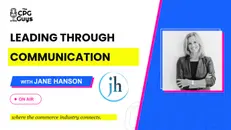
The CPG Guys are joined in this episode by 9-time Emmy Award Winning Journalist and Executive Coach Jane Hanson.
Follow Jane on LinkedIn at: https://www.linkedin.com/in/janehansontv
Follow Jane Hanson online at: http://janehanson.com
Jane answers these questions:
- Jane, you spent nearly 3 decades as a broadcaster on NBC and won nine Emmys before becoming a communications coach. What did live television teach you about communication that most business leaders never get the chance to learn?
- Your website carries a line I love — “Don’t EVER wing it” — along with that famous quip about how long a good speech takes to prepare. In a world of back-to-back meetings and AI-drafted talking points, what does real preparation look like for a busy executive?
- You’ve coached leaders across finance, insurance, tech, fashion, media, pharma, and even chefs and restaurateurs. What’s the most common communication mistake you see, no matter the industry?
- You help clients become “comfortable and commanding on camera.” Today so much leadership happens on video — all-hands calls, LinkedIn clips, podcasts, retailer pitches. What are the two or three things a leader can do right away to show up better on screen?
- In your Forbes piece on the 2026 Oscars, you wrote that audiences remember stories far more than lists of names. How should a CPG or retail executive use storytelling in a boardroom, an earnings call, or a joint business plan with a retailer?
- That same article praised Conan O’Brien’s humor for building rapport, but warned about letting humor become the headline. How can leaders use humor and personality to connect without creating a problem for themselves?
- You’ve spent a career asking tough question in s as a journalist. Now that you coach the people being asked, how should a leader handle a hard question — whether it comes from a reporter, an investor, or their own team — without getting defensive or going off message?
- Another lesson from your Oscars piece: your reputation enters the room before you do. In an era where every comment can be clipped and shared, how should leaders think about consistency and message discipline over the long term?
- You wrote about how AI was supposed to make in-person conferences obsolete, and instead attendance is surging. As AI writes more of our emails, decks, and talking points, what parts of leadership communication must stay unmistakably human?
- Much of your Forbes work focuses on how communication helps women advance. Looking at your reporting on the gender pay gap, where does communication — negotiating, advocating for yourself, being heard in the room — make the biggest difference, and what should organizations be doing differently?
- You’ve also written about how consumer brands communicate with women — from the DIY beauty boom to the American Heart Association’s Go Red campaign with retailers. What can CPG leaders learn from those examples about speaking to consumers versus speaking to their own teams?
- If a leader listening today could adopt just one communication habit starting Monday morning, what should it be?
CPG Guys Website: http://CPGguys.com
FMCG Guys Website: http://FMCGguys.com
SheCOMMERCE Website: https://shecommercepodcast.com/
Rhea Raj’s Website: http://rhearaj.com
Lara Raj in Katseye: https://www.katseye.world/
DISCLAIMER: The content in this podcast episode is provided for general informational purposes only. By listening to our episode, you understand that no information contained in this episode should be construed as advice from CPGGUYS, LLC or the individual author, hosts, or guests, nor is it intended to be a substitute for research on any subject matter. Reference to any specific product or entity does not constitute an endorsement or recommendation by CPGGUYS, LLC. The views expressed by guests are their own and their appearance on the program does not imply an endorsement of them or any entity they represent.
CPGGUYS LLC expressly disclaims any and all liability or responsibility for any direct, indirect, incidental, special, consequential or other damages arising out of any individual’s use of, reference to, or inability to use this podcast or the information we presented in this podcast.
SPEAKER_00
Hi, I'm Jane Hansen, a communications coach and a nine-time Emmy Award-winning broadcaster from NBC. And right now you are watching the CPG Guys Podcast.
PVSB
Hello and welcome to the CPG Guys Podcast, set at the intersection of commerce and tech. Your hosts, Peter V. S. Bond and Tree Rajagopalan, explore how brands and retailers engage consumers in an increasingly digitally driven world. And now, here are the CPG Guys. Hello and welcome to the CPG Guys Podcast. I am your gregarious co-host, PVSB, flying solo today. My co-host Papa Raj, father of Popstar's Rhea Raj and Cat's Eye's Lara Raj, while he is otherwise occupied getting ready for the U.S. tour of Cat's Eye. We're in Manhattan today at Omnicom's Herald Square office. Longtime listeners know that. In addition to podcasting, I serve as head of industry and client engagement at Flywheel, the Commerce Acceleration Division of Omnicom. To our audience, if you're getting value from these conversations, we have just three simple asks. First, subscribe to the CPG guys on whatever platform you're listening on right now: Spotify, Apple, Amazon Music, anywhere else, hit that subscribe or follow button. That way you will never miss an episode. Second, leave us a rating. It takes five seconds and it makes an enormous difference in helping other CPG and retail media professionals find us. You can give her any number you want, but it's kind of like French fries. You go to five guys, I like the number five. So smash the five. We would really appreciate it. And third, follow us on LinkedIn. Between episodes, we publish thought leadership, industry analysis, and content you will not find anywhere else. All built for the CPG and retail community you're already a part of. Search CPG Guys on LinkedIn and hit the follow, or just click the link that is in the digital show notes of this episode. Subscribe, rate, follow. Three simple actions that help us bring you more of the conversations that matter. And now to our guest. Great leaders don't just make good decisions, they make them understood. Broadcaster turned communications coach Jane Hansen joins us to break down what live television, Oscar Knight speeches, and her career coaching executives have taught her about preparation, storytelling, presence on camera, and protecting your reputation. We will explore how leaders can stay authentically human as AI takes over more of the writing, why in-person connection is surging, and what CPG and retail leaders can do to communicate with more clarity and confidence. Every leader in the industry has a message about a brand, a strategy, a merger, a retail partnership, a team. What separates the leaders people follow from the ones people tolerate is honestly how the message lands. My guest today has spent her career on both sides of the camera. Jane Hansen is a nine-time Emmy Award winner who spent 27 years as a broadcaster on NBC here in New York before becoming one of the country's sought-after communication coaches, working with corporate leaders, publishers, entrepreneurs, and even chefs across finance, tech, media, fashion, and beyond. She is a former Forbes contributor where she wrote about how communications drive success for women leaders. If you want to understand how effective leaders communicate under pressure, you definitely want to hear from Jane Hansen. Jane, welcome to the podcast.
SPEAKER_00
Thank you so much for being here. And I like Five Guys French fries, too. Who doesn't? I mean, no, really.
PVSB
See that bag with the grease already forming on the paper? It's like it just calls. So the background story is I met Jane last summer at the Can Lyons International Festival of Creativity. She was wandering along the croisette looking a little bit lost, checking out some menus at the restaurants. And my dear friends Jackie and Christina, who had met her, they were staying, I guess, in the same building or very close to it. Yes, yes, immediately saw her and pulled her over to the table and said, No, you're definitely eating dinner with us. So we had a lovely little conversation over some pasta in Cannes on the Riviera. And more recently, Jane has appeared on the SheCommerce podcast. So I said, Well, I can't be outdone by Jackie and Christina. So I was definitely going to have uh Jane join us. So, Jane, we're really happy to have you here today.
SPEAKER_00
And thank you for the pizza because I ate pizza that night in Cannes. Ooh, it's supposed to be the best pizza.
PVSB
It was good. It was good. But I, you know, I'm from New Haven, Connecticut, and we have our whole genre of pizza. So we get really we get really touchy when people talk about great pizza.
SPEAKER_00
Like pizza.
PVSB
There's New Haven and then there's not exactly. That's that's just the advantage.
SPEAKER_00
I understand that. To our audience.
PVSB
Yeah. To our audience, please check out the digital show notes of this episode. You'll find a hyperlink to Jane's LinkedIn profile and to Jane's website to learn more as we carry on this conversation, which I'm gonna get started right now. Jane, you spent nearly three decades as a broadcaster on NBC here in New York. As I mentioned, you won nine Emmys before becoming a communications coach. What did live television teach you about communication that most business leaders really never get a chance to learn?
SPEAKER_00
Well, first of all, how to think on your feet in absolute chaos. When the world is falling apart and you're the one who's got to be calm, cool, and collected and make sense of things. Taught me the power of the camera. You know, we got and do interviews with some leaders of the world, and I was astonished at how malleable they came. They can be like, I'm the I'm the guy or the girl. And then all of a sudden you turn the camera on and they become mush in your hands because they don't know how to handle it. Found out that less is more with the short attention spans we have, you know, in today's world, you know what they are? What? 8.25 seconds. Wow. Exactly. But that's less than the time, according to Microsoft, that it takes a goldfish to feed. Okay. Um, so there you go. And then also something surprising that I only figured out after the fact, which was we would get reams of information about something and then have to turn it into a story that in today's world is probably a minute and a half long. I learned how to quickly discover what is the real story, what's the truth or the bottom line message to something, and it has been invaluable in helping people learn how to become good communicators.
PVSB
Your website carries a line that really resonated with me. Don't ever wing it. I wish I could say that were the case with me, but along with that famous quip about how long a good speech takes to prepare, in a world of back-to-back meetings and AI drafted talking points, what does real preparation look like for a busy executive?
SPEAKER_00
Well, first of all, I always caution them to literally put time on their calendar to prep. Because if they don't, and they do attempt to wing it, they're gonna not sound good.
PVSB
Some of the best people I've ever seen, they spend the end of their day putting together exactly what they need for the next day, and it's sitting on their desk when they walk in, and they always seem to make everything work. And I got to imagine that there is a connect there.
SPEAKER_00
There is definitely a connect. Now, by the way, your message may be continually kind of the same. Yeah. We sell really good computers or whatever the heck the message is, but you always can have a different audience. I focus on three things. Who are you talking to? What are you saying, and how are you saying it? And they and each in their own right have um some importance. So you have to know how to switch it up and how to adapt. And that's really important for them to do. But your message may be basically the same. It's just making some changes to adapt for where you need to adapt it. Um but when I say don't wing it, I'm telling you that's where people get into trouble.
PVSB
You you touched on the way you communicate. I've always believed that there are three forms of communication: the words, the actual words that we use, uh, the uh the tone that we deliver it in, and then the nonverbal gestures that we make. From your perspective, where would you rank the order of what is if you had to focus on one thing to be critical, which of those three things really helps bring the audience along?
SPEAKER_00
We have been we've had a spoken language, even though we've walked on earth for, depending on who you listen to, between two and fourteen million years.
SPEAKER_02
Okay.
SPEAKER_00
We've only had a spoken language for about 160,000 years. Which means how do we communicate before then? Through our body.
PVSB
Yes. So very much about the m the nonverbal gestures that you're making. Like if you if I come up and I go like this to you, that's a that tells you, oh yes, getting too close to exactly.
SPEAKER_00
So there's a whole lot of things that we do uh innately that we don't even know. And it's not just gestures, it's eye contact, it's um how we the facial expressions, it's our posture, it's one of the big things from the past is how you uh how how vulnerable you leave your neck because that can be a place of real attack.
SPEAKER_01
Okay.
SPEAKER_00
So there's a whole lot of things that go on that we don't recognize we're doing, and they all send a signal. So there is a study that was done. Um, it's actually been done by both USC and UCLA, and there have been many others. But in that study, what it says is that a total of 93% is how you use your body and how you use your voice. Okay. Yeah. Now don't think, oh, then, well, it doesn't matter if I wing it, what content I have, because it's all about how I say it.
PVSB
This is why I tell people do not send text messages to deliver important information. You are missing, according to your stats, 93% of the delivery. You are. Because people can interpret how the tone of a text message, even though you had no intention of them perceiving a tone associated with it.
SPEAKER_00
Something as simple as you don't have time, but somebody needs an answer. So you go, yes. And they're going, well, they're not giving me enough time to they're not, they're not answering it appropriately. They're uh is that a yeah, yes, or is that a yes excitement? What kind of a yes is it?
PVSB
Yeah, I found that uh with Sri and I, when it's something that we need to deliver that we feel it's important, we will send each other either a video note or an audio note rather than just a text because it's so easy to misinterpret a text and the meaning of it, as you said, what's associated with how it is delivered. People get in their own minds thinking about what the tone might be, and it can be completely off.
SPEAKER_00
Context is wrong. Yeah. And context is a really important part. You know that when it comes to how we perceive each other, we perceive each other 30% different than we think people are perceiving us.
PVSB
I believe that. As I mentioned in the open, you've coached leaders across quite a number of industry functions. From your perspective, what are some common communication mistakes that you see no matter what the industry is?
SPEAKER_00
I would say one of the biggest ones has to do with not really listening. We are bad listeners and we need to be better. As my mother used to tell me, we have two ears and one mouth for a reason. So listening is is super, super important. Another one is our inability to allow for dead air. We so we forget the most one of the most important tools in our arsenal, which is the pause, which is supposed to be about the length of time it takes to tap your foot. Now, one of the greatest reporters' tricks ever is I ask you a question, you finish answering it, and I go, all of a sudden you say in your head, Did I miss something?
PVSB
Do I need to add something? I need to add something. Did I go wrong?
SPEAKER_00
This is where people get caught up and they say things they don't want to say. It's right at that moment.
PVSB
Deliver your message and hold fast.
SPEAKER_00
Exactly.
PVSB
Very good.
SPEAKER_00
That is a very common problem.
PVSB
You help clients become comfortable and commanding on camera. Today, so much leadership happens on video, all hands calls, LinkedIn clips, podcasts like this one, retailer pitches. What are two or three things that a leader can do right away to show up better on screen?
SPEAKER_00
First of all, they should watch themselves.
PVSB
Oh yes.
SPEAKER_00
And I mean, really watch themselves.
PVSB
It was hard. I'm sure for you it was when you first started in the industry. Of course I didn't. When I started doing podcasts, I could not stand listening to myself or watching myself. Oh, it's horrible.
SPEAKER_00
Most of my clients say, Do I really have to watch this? And I said, Do you want to get better?
PVSB
You have to.
SPEAKER_00
Yeah. And the first thing they say is, I hate the way I look, or oh my voice. My voice is so squeaky. I had a client, I had a client a couple of weeks ago who literally had an absolutely beautiful, deep, he was a guy, deep, deep voice that sounded so authoritative. But in our conversation before, you know, or I do intake questionnaires, in the thing he said, I can't stand my voice because I don't believe it's carries authority. And so therefore, I repeat things a lot. And one of the problems that people had with him, and they hired me, is because he was so redundant.
SPEAKER_01
Yeah.
SPEAKER_00
So I showed him the video of him speaking with this really, really great voice. He goes, That's me. I said, Have you ever listened to yourself? He goes, No. I went, You have a fabulous voice. Hence he stopped the repetition. He understood the power that he had with his vocal cords. And I got a call from his boss going, What did you do to him? He is so there, so confident, so confident. One video.
PVSB
Yeah, I think it is critically important to understand. You also it's amazing how much when I record episodes with people and I show them the raw video, they will say words like, um, you know. And it's gotten to a point where I just have my video editor cut that all out because they will get very self-conscious if they do that. And more often than not, whenever I ask a question, the first response they say, that's a great question. Well, I know it's a great question because I asked it, but I don't need to hear it. So my video editor also knows whenever you hear that, just cut it out. We don't need to hear that. Nobody wants to hear that. Right?
SPEAKER_00
Filler words. So filler words are there's a bunch of different reasons for filler words. One of the first ones is bad prep, because you don't know what you want to say. So now you're filling up that dead air by um, you know, like so. The second one is we we don't want to have that pause thing that I'm talking about. So that's a problem.
PVSB
You have to be comfortable with just being quiet instead of saying um and it's a drag out because that sounds so much worse than when you pause, it's it seems intentional and much more learned than when you go, um it is.
SPEAKER_00
Yeah, it it is. A pause. A pause is actually brave.
SPEAKER_01
I think so too.
SPEAKER_00
We're allowing for there to be a little bit quietness, means people absorb it. They can take it in. Right. Also, it re-engages them.
PVSB
I like that. In your fourth piece on the 2026 Oscars, you wrote that audiences remember stories far more than a whole list of names. How should a CPJ retail executive use storytelling in a boardroom, an earnings call, or a joint business plan taking place with one of your retail customers?
SPEAKER_00
Tell a story about the product.
PVSB
Yeah.
SPEAKER_00
I was at last week I was at two conferences, and in one of them was this uh this guy goes around and goes to all kinds of stores, and and that's what he's hired to do. And he said he said, one of the most important things that I see every single day is I walk into a store and I am not greeted by a salesperson. Or I ask a question and they basically say, No, we don't have it before they even check. Because what you are failing to recognize is that is your the first encounter between the product and the potential buyer, and you're blowing it because you have somebody who is not trained. And so he told that story, and everybody in the room is thinking, well, we got this great AI stuff, and we've got this and we've got that. But they don't have a trained salesperson that says, Welcome, Peter, I can't wait to show you that sweater.
PVSB
If you ever wanted to believe in the importance of that, all you have to look at is this week's headline. There's a story of a store in Brooklyn that Kelly Clarkson went to this.
SPEAKER_01
Yeah, of course.
PVSB
And the battle that's going on with her deciding to just shame them on poor customer service. And uh now, you maybe all press is good press, and that store is suddenly getting a lot of attention, but my God, I don't think that's the kind of attention you want. Oh my goodness. That same article praised Conan O'Brien's humor for building rapport, but warned about letting humor become the headline. How can leaders use humor and personality to connect without creating a problem for themselves?
SPEAKER_00
Well, there is a very easy solution to that. Number one, it's knowing your audience. Yeah. Because who is that? There's there's different geographical areas where one piece of humor is really funny, and in another place where they're, huh?
PVSB
Oh, okay.
SPEAKER_00
Or just anything. Who's the audience?
PVSB
Aaron Powell When you deal with CPG clients that have global representation, I was working with uh one client where I presented them three or four times annually, and each time I had to do a morning session for North America and Europe and an evening session for Asia Pacific, and the humor did not translate. Right.
SPEAKER_00
It doesn't. So you have to know your audience. That's the first thing. Sometimes like little self-deprecating pieces of humor work really well, but you have to be careful because you don't want to put yourself down too much. And uh great comedians. I used to do a lot of the last show that I did at NBC, Joan Rivers, when she was still alive, would come on our show frequently, and she is a riot. But she would do these small there's a theater on 42nd Street where she would do small little shows because she would practice your jokes over and over and over. All the best ones did.
PVSB
They'd practice Joey Leno, after he was done recording, would go practice this entire monologue for the next night by put doing it in front of live people and keeping the jokes that that hit the mark and dispensing with the ones we're not.
SPEAKER_00
But so what I'm saying is you want to think like a comedian in that don't try something new when you're making a great presentation. Try it in your prep work. Don't don't for God's sakes, do not wing a joke.
PVSB
I I'll tell you, humor is an important tool for Shri and me. We we deal with a lot of content that can be very dry, retail media, advertising impressions, and what have you. And we've always felt that being a little self-deprecating and making fun of ourselves was a bit of a Mary Poppins approach. The a spoonful of sugar helps the medicine go down. And so if we made it a little more jovial and added some levity, it made it easier for our audience to consume long. And we talk a lot about what's going on in our lives, our daughters and what have you, because we wanted our audience to have a personal connection with us. And it's an ongoing community that we're creating. And that is that's a very important recipe.
SPEAKER_00
It is. And what's interesting, Aristotle is considered to be the father of Kingdoms. I heard of that guy. Yeah. Have you met him?
PVSB
No, no, no. Not that old, Jane. Okay.
SPEAKER_00
But he's so he talked about three things. And one is ethos, which is do people trust you? Are you the expert? And the second part is logos, are you being logical in what you're saying? And then the third part is pathos, which is about uh emotions. Now, it which goes along with that great, great Maya Angela quote: people forget what you said, they forget what you did, they'll never forget how you made them feel. And so that that feeling part is where we always want to get to in great communication.
PVSB
Let me remind our audience that we are speaking with Jane Hansen, communications coach and nine-time Emmy Award-winning broadcaster. I also want to thank my dear friend Benoit Viterre from Liquid Deaf. You put your products on a great deal during Amazon Prime Deal Days, and I managed to get three cases of your energy drink. So I am stalked for quite a while. Thank you, Benoit. He's a good friend of ours.
SPEAKER_00
I like Liquid Deaf.
PVSB
It is, it is the I mean, the whole branding of what essentially is good-for-you beverages is just where else could you take the most commoditized product in the world, the most commoditized product, and turn it into a brand equity play? That I gotta give them credit. They they have really made it cool to put their cans on the table and talk about it. So, but that's another story. Jane, you spent a career asking really tough questions as a journalist. Now that you coach the people being asked those questions, how should a leader handle a hard question coming at them? Whether it comes from a reporter, an investor, or their own team. Without getting defensive or going off the message.
SPEAKER_00
It can actually be quite easy. First of all, again, in your prep work, think about what's the toughest question somebody can ask me. Be prepared for the tough questions because they're gonna show they're gonna show up eventually. The second thing is is what we call, I call bridging, which means you answer a little bit of it. And this is especially important when you're doing an interview because of all the time constraints. Answer a little bit, but then you say a transition line so you can get back to your own message, which is, but what I think your audience might be more interested in is blah, blah, blah, blah, blah. And then if it's a question that you truly you don't want to answer, but you don't, but you don't really have an answer, you can always say, you can you I say pause, play it cool, and then ask for elaboration because sometimes the question they're asking is not really what you think it is.
SPEAKER_01
Yes.
SPEAKER_00
And I will tell you that as a reporter, I know how to ask a question in about 10 different ways, and they will have 10 different answers because they don't realize it's all the same question.
PVSB
Now, I I assume you'd say that that's the appropriate way to do it. The inappropriate way is what most politicians seem to do these days, which is pretend they're on their phone and try and run away from you as fast as they can. If I see another one of those embarrassing situations, I gotta say I love the fact that TMZ opened up a bureau in Washington, D.C. And they're putting it to the politicians the way that they have been doing it to celebrities as the paparazzi for years and years. It it's it's fundamentally changed the game and it's forced politicians to actually deal with this and not want to look like complete imbeciles.
SPEAKER_00
Well, yes, it has. I agree with you. I think it's fun to see.
PVSB
Yeah. All right. Another lesson from your Oscar piece uh your reputation enters the room before you do. I like that. In an era where every comment can be clipped and shared, how should leaders think about consistency and message discipline over the long term?
SPEAKER_00
For one thing, you should always know that anything you say anywhere could be recorded.
PVSB
And will be used against you.
SPEAKER_00
And will be. And the other part, some of some of my clients get really upset and they'll say, they took what I said completely out of context. And I said, No, they didn't. What they did was you talked for two minutes on a subject, and they only have 30 seconds. And so they took what they thought was the best 30 seconds of that. So you've got to learn to make your answers, you know, less is more. Make your answers more concise on the really important stuff.
PVSB
Yep. So get your sound bite out that you want them to gravitate towards.
SPEAKER_00
Right. And the other thing is, oh, they they said it was off the record. I don't believe anything's off the record because somebody else might be also listening. They're hearing that, and they're gonna use it.
PVSB
I like that. Uh you've also written about how AI may have been perceived to make in-person conferences somewhat obsolete, but instead, I can certainly say this from my experience. I I just see more and more in-person events growing and growing, I think, as people crave to interact with others. As AI writes more of our emails, our decks, our talking points, what part of leadership communication must stay unmistakably human?
SPEAKER_00
Well, the part where we have relationships.
PVSB
Okay.
SPEAKER_00
That's about relationships.
PVSB
You know, there's a there's some people that will argue Trevor Burrus Shre Sri's trying to build an AI agent to replace me as the co-host. I don't I think that flies in the face of that, doesn't it?
SPEAKER_00
I would you gotta get to first. Yeah, I know.
PVSB
I I got I'm coming for you, Sri. I've already I'm gonna build a bot and I'm gonna beat you to it.
SPEAKER_00
So what's some people are calling what's going on right now the fourth industrial revolution, which means communication has never been more important. I don't know about you, but at a day's end, there will be days when all I've done are Zoom calls.
PVSB
Oh my goodness.
SPEAKER_00
And at the end of the day, I'm so craving a real life human being that I can sit next to and talk to. I I just that's who we are. It's and and so what do we do then? How do we how do we make sure we're having those great conversations? We need to pay more attention to it. I met you at a convention. I met so many people at conferences now. And I mean, I was at a big event last night. I was at two conferences last week, I'm going to two more next week. It's it's they're all over the place and they are being attended more than they ever have before.
PVSB
Talking about that personal interaction aspect, I kid a lot about Sheree and we do that as I said, it's kind of our shtick.
SPEAKER_01
Yeah.
PVSB
But we talk probably four or five times a day. He's in LA, I'm in in New York. And our first conversation today always, always, always starts off with asking about how our daughters are doing, how the family's going, how are you feeling, what's going on. Business always takes a second seat. It always grounds us in what's important to who we are. And it makes the rest of the work that we do much less combative. We've we have that connection, we value our relationship in the long run. Yeah, sometimes we get upset about little things, but it always goes back to that. I think that that human component is what essentially gets to the point of what you said, which is the personal relationships have to be human.
SPEAKER_00
They do have to be human. It's interesting because I do one of the courses I teach is called the ROI of small talk. And a lot of people say, ah, small talk, it's I don't like it. It's boring you. Oh, hi, nice to meet you. Uh, how do you like the weather today? I said, well, break the script and think of something else to start a conversation.
PVSB
You have to have uh a quiver of good small talk conversations. Like once someone once told me, you always have to have one clean joke in your repertoire, one that doesn't involve an innuendo or anything else like that. Call it a dad joke, so to speak. But uh I absolutely agree. There you go, exactly. But you really you need that in, you need those kind of icebreakers that you can have a conversation. It doesn't have to be deep, but it has to show some level of wanting to engage with a person. Absolutely. Much of the work you've written in Forbes focuses on how communications help women advance. As I mentioned, you'd you recently were on uh the podcast She Commerce, which is hosted by our dear friends Christina and Jackie. Looking at your reporting on the gender pay gap, right? Where does communication negotiating, advocating for yourself, being heard in the room make the biggest difference? And what should organizations be doing differently?
SPEAKER_00
Uh one of the in that particular article where I've talked about how the gender pay gap had not really moved on the scale, the women that I spoke with who are real leaders talked about the fact that we do not negotiate, talking about women, do not negotiate for ourselves very well. Why? Because we don't see our own value. So I would say to females that are watching this, and and males as well, because sometimes they're just as bad, is really decide and make a list of what is my value, what do I do really well, why do I deserve more money, etc. That's I think that's really important to do. And the other part of this is reflecting upon what one of women's problems is that we sometimes get too caught up in, well, I don't, you know, I don't want to be too boastful and I don't want to blah blah blah. So if we focus instead on our purpose, our why, that will take a lot of that away. So what's your purpose? What's your why? So if organizations could help women really understand why they're important, what the purpose of what they're doing is, and just give them a bigger slice of the pie, a bigger role, it will change a lot.
PVSB
Why is it that when a job description comes out for a new position gets posted and there are 10 requirements, a man looks at it and says, Oh, I've got two of those, I'm in, I'm applying. And uh and a woman feels like she needs to have eight or nine of those. Uh I I never understood that. Uh I don't either. I think it's I and to the point when you talk about knowing your own value, I was I've always been impressed with the work that your former colleague at NBC now at MS Now, Mika Brzezinski, has done with her know your value group. And the and they have they've made it uh very focused. I also love she talked about how her now husband, Joe Scarborough, helped her as an ally. And the the question I have, the follow-up question I have is about men as allies. He helped her to understand where she was getting paid relative to him and some of the other people and kind of coached her in how to go in and negotiate that. So, how important is it for there to be not just women looking to help out other women, but also male allies in the room to make sure that this is advanced?
SPEAKER_00
Aaron Powell It's very important. We all work together. And I hate to think of us this is the women and this is the men. We together, because we look at things differently, we bring different different aspects to the table. And the more we can share that, the better we will get. I one of my my biggest mentor was a boss that I had when I first got to NBC. He's was from the Midwest, like me. We understood each other very well. And he gave me a lot of good advice about how to get along with people. Okay. And one was to ask for help. We're afraid to ask for help. Yeah, we think it we think it somehow brings down our competence level when the truth is most people are really willing to help. And the second part is they're flattered when you ask them.
PVSB
I remember very early in my career, I was working at uh at PlayText Products. Yes, I was I was doing category management for feminine care. I know more about feminine care than most men in the world want to understand. But I was sitting in my office and my boss came in. Shout out to Jim Judge. Jim came in and he said, Hey, listen, I'm down in the boardroom with the CEO, and he had a couple of questions. I don't have the answer. I know you know what they are. And I figured he was just gonna ask me and I would tell him. He goes, Come with me. And he walks in, he goes, Peter knows the answer to this. And I just sat there and I answered the question. He goes, See, I told you no. Thank you. Thanks, Pete. We're good. And that little, that little trust that he put in me and not wanting to take the credit himself, saying, I'm more than happy to put someone in front of my CEO that in this particular area knows more than I would. He built a lifetime of respect and trust where I was devoted to Jim. He could do no wrong in my eyes, because he he was okay surrounding himself with people that were smarter than him in certain ways, and he didn't try to take credit for it. He let that credit go to the people who actually deserved it. Phenomenal.
SPEAKER_00
Brilliant.
PVSB
Yeah, that that's a great leader.
SPEAKER_00
That's a great leader. And and look, to this day, you're still you've still remembered that.
PVSB
I remember that story. It's a story that sticks in my head. It's how he made me feel in that moment, to your point.
SPEAKER_01
Yeah.
PVSB
And Maya Angelus. You've also written about how consumer brands communicate with women from DIY Beauty to the American Heart Association's Go Red campaign. What can consumer goods leaders learn from those examples about speaking to consumers versus speaking to their own teams? Very different kind of tone and message, right?
SPEAKER_00
Right. How how do you sell products if you can't speak to the consumer?
SPEAKER_01
Yeah.
SPEAKER_00
You just can't. And one of the so this this American Heart Association shop go red shopping thing. Anyway. Ever I think since the time I became a reporter, the statistics were awful about women in heart disease.
SPEAKER_01
Yeah.
SPEAKER_00
And they haven't changed much. Why? Because women were not getting the message. This whole campaign is, well, let's go meet them where they are. Let's go to the store. Let's put this on into the into the shopping arena so that they can actually learn something as they're doing a fun hobby, shopping or whatever kind of shopping they're doing. So it's you've got to find a way. Look, I am a consumer of great ads.
SPEAKER_01
Yeah.
SPEAKER_00
Video ads. Ads on any kind of digital video that I have.
PVSB
The gas pump, the the screen that's in the aisle as you're walking out or wherever it might be on your smartphone. Exactly. You are you are surrounded by immersive media. It's only gotten bigger. Now what amazes me is how people aren't watching big TVs anymore. They watch these little screens.
SPEAKER_00
Right. But I because I lived in a video world my whole life, I look at something and I say, that's not working. Or look how they did this wrong. Why did they say this? Why are they using that person? Why is this casting bad? What what's the imagery they've got behind it? Ooh, that is really stupid. Or that's brilliant. And the difference is subtle, and you and I can pick it out in a minute.
PVSB
Yeah. Jane, if a leader listening today could adopt just one communication habit starting Monday morning, what should it be?
SPEAKER_00
Listen. Listen better.
PVSB
Yeah, listen better.
SPEAKER_00
And everything has to start with respect. Even if you have an employee, a partner, a peer, a whatever it is, well, maybe you wonder how good they really are. I mean, we don't all get along. But there's if you show respect and dignity, that will take you far.
PVSB
Yeah, I I've always found that if you're trying to persuade and and win people being definitive and authoritative about your message without taking a Socratic approach and asking questions and listening to other people, you're not going to win hearts. It's just, it's not going to happen.
SPEAKER_00
My aforementioned mentor once told me that he I should make the viewer my best friend, even if they sent me bad messages. So I got an email once from a woman, had a show of my own, and we used to do the intros and outros of in Times Square way up high in a village. And I always wore leather jackets and jeans. So I get this email from her and it says, I don't think you're dressed appropriately. I don't like the you know, I don't like the way you look. I think you're too old to wear those clothes.
PVSB
Oh my goodness.
SPEAKER_00
So instead of you know dumping the email, I thought, I'm gonna test this his theory out. So I wrote her back and I said, Thank you so much for writing. Tell me how you think I should dress. I appreciate what you're saying. I appreciate hearing from viewers. Please let me know. I get an email back and it says, I'm so sorry I hit send. My husband walked by the television screen when you were on and said, Why can't you look like that? And I was so irritated that I set that thing off. She said, You look perfect. Don't change a thing. And again I apologize. And I wrote her back and I said, Well, I hope that you will continue to write to me when you see other things that maybe we should change. Have a great day.
PVSB
So many people I know put a 30-second delay on it on their email outbounds because after they click send, they realize, oh my God, what did I just do? You don't get a chance to take it back unless you set yourself up for that kind of success.
SPEAKER_00
But the proof in that story, yeah, it's usually about them. It is about them.
PVSB
It's not about you. Yeah. All right. Jane, thank you for taking time out of your busy day. I know you're headed down to DFW after this for some other activities, but I appreciate you taking time out of your busy day here in Manhattan to join me for this conversation. To our audience, if today's conversation sparks something for you, maybe a new idea, fresh perspective, or just a reminder that this industry is worth showing up for every day, share it, tag us, tell a colleague. The more voices we bring into this community we've created, the sharper all of us get to our over 48,500 followers on LinkedIn that trust us to inform, educate, and entertain you about this industry. Thank you for your trust and encouragement. Until next time, keep pushing the conversation forward. I am PBSB, flying solo today, but on behalf of my co-host Papa Raj, this has been the CBT Guys Podcast.